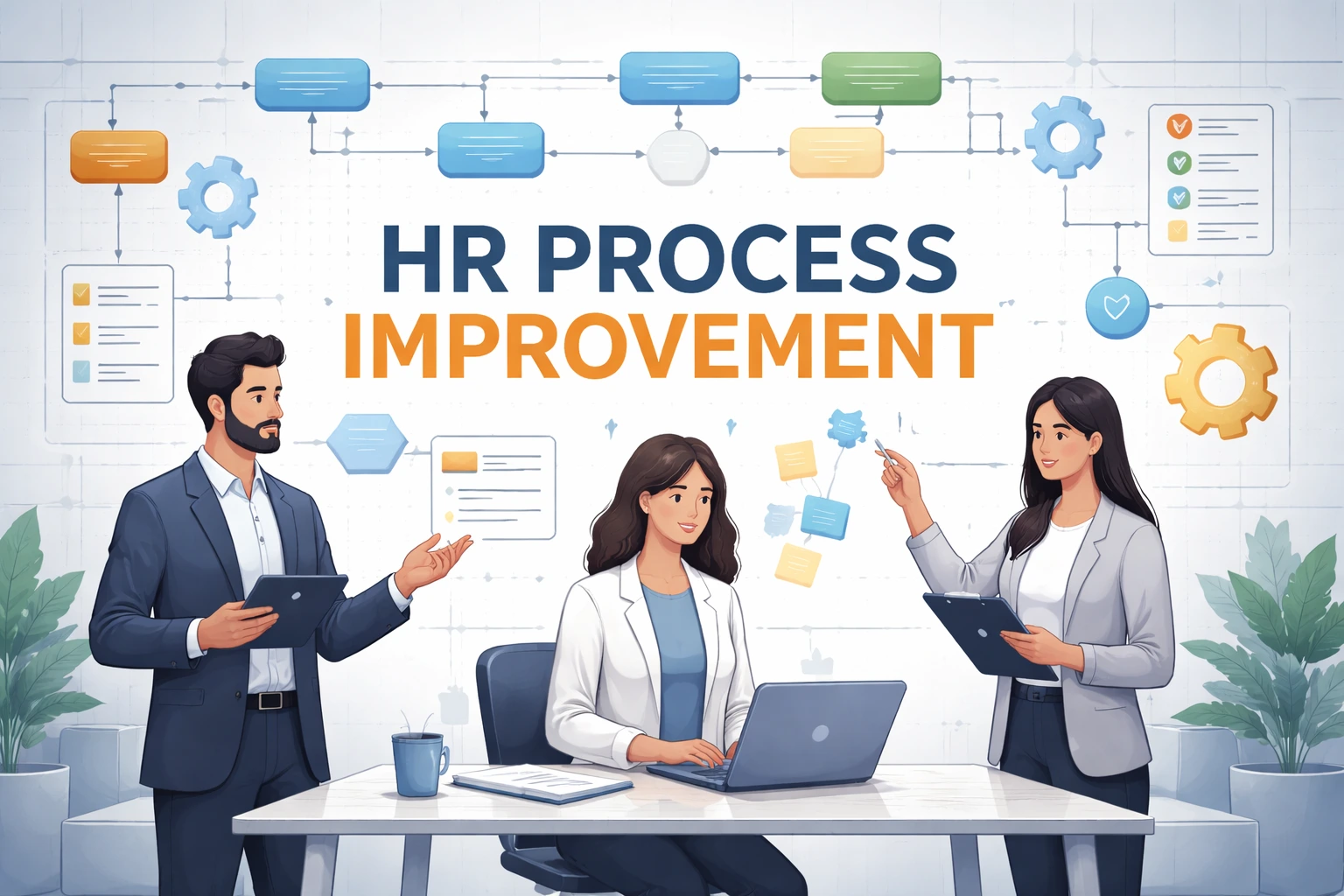
An HR consultant helps organizations improve hiring, compliance, employee relations, leadership systems, and workforce performance. In simple terms, HR consultants solve people-related business problems, reduce risk, and build stronger HR systems. If you are asking, do I need an HR consultant, the answer is usually yes when growth, turnover, compliance concerns, or weak management systems start creating avoidable problems.
As a business owner, it is easy to think of HR as a function that handles paperwork, hiring, and employee problems after they become urgent. That narrow view is one reason so many organizations wait too long to bring in real HR expertise. By the time leadership reaches out for help, the business is often already dealing with turnover, inconsistent management, compliance exposure, poor documentation, or a culture that is starting to work against operational performance.
A strong HR consultant does much more than step in during a crisis. The right consultant helps design the people systems that make better hiring, cleaner compliance, stronger leadership, and healthier organizational performance more likely. In other words, a good HR consultant is not just an extra set of hands. A good HR consultant is a strategic partner.
Why Listen to Me?
I'm Dr. Thomas Faulkner, founder of Faulkner HR Solutions. My consulting work focuses on helping Texas organizations strengthen workforce stability, leadership accountability, compliance infrastructure, and operational effectiveness through practical HR strategy.
I hold a Doctorate in Business Administration, the SPHR credential, and a Lean Six Sigma Black Belt. More importantly, the frameworks I use come from applied work in organizations that needed more than surface-level advice. They needed clearer systems, stronger managerial expectations, and HR support tied directly to business outcomes.
What Is an HR Consultant?
An HR consultant is an external advisor who provides specialized expertise on people operations, workforce strategy, HR compliance, leadership systems, and organizational effectiveness. Unlike an internal HR generalist who may be buried in daily administration, an HR consultant is typically brought in to solve higher-impact problems, design systems, improve processes, and address risk areas that need deeper expertise.
That distinction matters. An HR consultant is not just there to answer policy questions. A strategic consultant helps identify the hidden structural issues behind turnover, poor hiring decisions, inconsistent management, weak documentation, or compliance gaps. The best consultants do not just react to symptoms. They help build systems that make those symptoms less likely to occur.
An HR consultant helps organizations solve people-related business problems through expert guidance, system design, risk reduction, and strategic workforce support.
What Does an HR Consultant Actually Do?
The work can vary depending on the organization, but most effective HR consulting falls into a few major categories. The common thread is that each one supports stronger business performance through better people systems.
1. HR Compliance and Risk Management
One of the most visible roles of an HR consultant is helping organizations identify and reduce legal and operational risk. That includes reviewing policies, auditing documentation practices, evaluating classification issues, strengthening investigation procedures, and ensuring the organization is not relying on outdated or inconsistent employment practices.
- Employee handbook development: creating or updating policies so expectations are clear and the organization is less exposed.
- Compliance audits: reviewing hiring, wage and hour, documentation, and employment processes to identify weak points before they become expensive problems.
- Workplace investigations: conducting impartial reviews of employee complaints involving issues such as harassment, discrimination, retaliation, or misconduct.
For Texas employers, that often means dealing with state-specific realities alongside federal compliance concerns. My HR compliance consulting work in Texas frequently centers on exactly those kinds of local risk patterns.
2. Hiring, Onboarding, and Retention
Many businesses assume hiring problems are recruiting problems when they are often process problems. An HR consultant helps improve the full talent lifecycle, not just job postings. That includes role clarity, structured interviews, onboarding design, candidate evaluation systems, and retention analysis.
- Strategic recruitment: building a stronger hiring process with better role definitions, interview discipline, and decision consistency.
- Onboarding design: improving the first 30, 60, and 90 days so new hires are not left to guess their way into the organization.
- Retention strategy: identifying why employees are leaving and developing a more targeted employee retention strategy than generic morale efforts.
Organizations often respond to turnover by recruiting harder when the real problem sits inside onboarding, supervisor effectiveness, compensation alignment, or unclear role design.
3. Leadership Development and Management Support
Some of the most expensive workforce problems are management problems in disguise. HR consultants often help organizations strengthen supervisor capability, improve accountability, and create more intentional leadership development systems.
- Leadership development: building practical management skills rather than promoting top performers and hoping they figure leadership out.
- Performance management: designing review and accountability systems that are clearer, more useful, and easier to sustain.
- Manager coaching: helping leaders handle conflict, documentation, feedback, and employee relations more effectively.
This is one reason leadership consulting and HR consulting often overlap. If managers are weak, almost every people system under them will also weaken.
4. Organizational Development and Workforce Strategy
At a more strategic level, an HR consultant helps align workforce structure with business objectives. That can include job design, org structure evaluation, succession support, change management, process redesign, and broader workforce planning.
In this role, the consultant is not just solving isolated HR problems. The consultant is helping the organization function more effectively as a system. That is the difference between transactional support and strategic HR work. You can explore those broader capabilities through my HR consulting services and organizational development consulting work.
What Does an HR Consulting Firm Do?
An HR consulting firm provides outside expertise to help organizations improve compliance, hiring systems, employee relations, leadership development, workforce structure, and operational effectiveness. While a solo consultant may focus on one specialty, an HR consulting firm often supports a wider range of business needs across multiple service lines.
In practice, that means an HR consulting firm can help with policy modernization, handbook development, compliance audits, investigations, hiring process design, onboarding systems, manager development, retention strategy, and broader organizational design work.
The real value is not just access to advice. The real value is access to structured problem-solving that ties people decisions back to performance, risk, and operational outcomes.
When Should You Hire an HR Consultant?
Many organizations wait until something has already gone wrong. A complaint lands. Turnover spikes. A manager creates a documentation mess. Leadership realizes too late that the company has outgrown its informal people practices. A better approach is to bring in help when early warning signs show up.
- You are growing quickly: rapid growth often exposes weak hiring, onboarding, and management systems.
- You have compliance concerns: if policies are outdated, documentation is inconsistent, or classification issues are unclear, outside review can reduce exposure.
- Employee morale or retention is slipping: repeated complaints, avoidable exits, or visible management inconsistency usually point to deeper structural issues.
- You lack in-house expertise: smaller organizations often need strategic HR support without hiring a full-time senior leader.
- You are dealing with change: restructuring, rapid expansion, leadership turnover, or cultural drift often require more disciplined HR guidance.
The best time to hire an HR consultant is usually before a people problem turns into an expensive operational problem.
Do I Need an HR Consultant?
If you are asking do I need an HR consultant, the better question is whether your organization is already showing signs that people systems are not keeping up with business needs.
You likely need an HR consultant if hiring feels inconsistent, turnover keeps repeating, managers handle people issues differently, documentation is weak, or compliance concerns keep getting pushed aside because no one has the time or expertise to address them properly.
Many small and mid-sized organizations do not need a full-time senior HR executive yet, but they do need senior-level HR judgment. That is where consulting becomes valuable.
What an HR Consultant Can Help You Fix
Most organizations do not go looking for an HR consultant because everything is running smoothly. They start looking when people problems begin affecting performance, leadership time, consistency, or risk. That is usually the moment when business owners realize the problem is not just HR paperwork. The problem is that the organization has outgrown informal systems.
A strong HR consultant can help fix issues such as:
- Inconsistent hiring decisions: interviews vary by manager, role expectations are unclear, and hiring choices feel more reactive than disciplined.
- Weak onboarding: new hires are left to figure things out, ramp-up takes too long, and early turnover keeps repeating.
- Documentation problems: performance issues are handled inconsistently, corrective action is vague, and leaders cannot clearly support employment decisions.
- Manager inconsistency: one supervisor holds people accountable while another avoids conflict, creating confusion, frustration, and uneven standards.
- Outdated policies and practices: the handbook exists, but daily operations no longer match it, and compliance risk grows quietly in the gap.
- Turnover without a clear explanation: people keep leaving, but leadership is still guessing whether the issue is pay, management, workload, culture, or process design.
- Compliance anxiety: leadership suspects there are weak spots in classification, documentation, investigations, or employee relations, but no one has had time to evaluate them properly.
Most workforce problems do not stay isolated. A hiring problem becomes a turnover problem. A turnover problem becomes a management problem. A management problem becomes a documentation and compliance problem. Good HR consulting helps stop that chain reaction before it becomes more expensive.
If any of those issues sound familiar, the business may not need more effort from the same broken system. The business may need outside HR expertise to identify what is actually causing the friction and build a more reliable path forward.
Signs You May Need HR Consulting
- You are hiring, but results are inconsistent.
- Managers handle employee issues differently from one team to another.
- Policies exist, but they are outdated or not followed.
- Turnover keeps happening and leadership cannot explain why.
- You need senior HR judgment but are not ready for a full-time HR executive.
What an HR Consultant Changes Compared with a Reactive Approach
A useful way to understand HR consulting is to compare it with what many organizations do without one. The difference is rarely about effort. It is about structure, diagnosis, and follow-through.
| Business Challenge | Typical Reactive Approach | Strategic HR Consultant Approach |
|---|---|---|
| High Employee Turnover | Keep replacing people and hope the next hires stay longer. | Diagnose root causes, review management patterns, and build a targeted employee retention strategy. |
| Compliance Anxiety | Ignore weak spots and hope nothing escalates. | Conduct a structured HR compliance audit and fix risk areas proactively. |
| Poor Leadership Bench | Promote strong technical employees with little preparation. | Create a more intentional leadership development plan with coaching and accountability. |
| Inefficient Hiring | Rush to fill openings and repeat inconsistent interview habits. | Improve role design, interview structure, and overall hiring process discipline. |
What Should You Look for in an HR Consultant?
Not every consultant brings the same kind of value. Some stay narrowly administrative. Others are stronger builders who can diagnose systems, improve leadership effectiveness, and connect HR work directly to operational outcomes.
At a minimum, look for someone who can do more than provide answers in the moment. Look for someone who can identify patterns, strengthen weak structures, communicate clearly with leadership, and translate people issues into business risk and business opportunity.
- Deep working knowledge of compliance and employee relations
- Clear experience with process design and implementation
- Strong judgment in sensitive workplace issues
- Ability to work strategically, not just administratively
- Practical understanding of your size, structure, and industry pressures
Frequently Asked Questions
An HR consultant helps organizations improve hiring, compliance, employee relations, leadership systems, and workforce performance through outside expertise and strategic guidance.
HR consultants help small businesses strengthen hiring, onboarding, documentation, compliance, manager support, retention, and HR systems without requiring a full-time senior HR executive.
You likely need an HR consultant if hiring is inconsistent, turnover keeps repeating, managers handle issues differently, policies are outdated, or compliance concerns are being pushed aside.
An HR consulting firm provides outside expertise to help organizations improve compliance, hiring systems, employee relations, leadership development, workforce structure, and operational effectiveness.
A company should hire an HR consultant when growth, turnover, compliance concerns, weak management systems, or organizational change start creating avoidable people problems.
Yes. An in-house HR manager often handles daily administration, while an HR consultant is usually brought in to solve higher-impact problems, improve systems, and provide deeper strategic expertise.
Conclusion: An HR Consultant Should Strengthen the Business, Not Just Support It
An HR consultant is not just someone you call when hiring gets hard or a policy question comes up. A strong consultant helps the organization reduce risk, improve hiring and retention, strengthen leadership, and build workforce systems that function more reliably under pressure.
That is the real value. Better HR consulting should make the organization stronger, not just more compliant. If your business needs more than surface-level HR help, the right consultant should be able to help you solve the underlying problems, not just manage the symptoms.
Schedule a consultation if your organization needs stronger hiring systems, cleaner compliance, better leadership support, or a more reliable HR foundation.
Further Reading from Faulkner HR Solutions
Related HR Questions, Answered
Direct answers from our HR FAQ library for Texas employers: