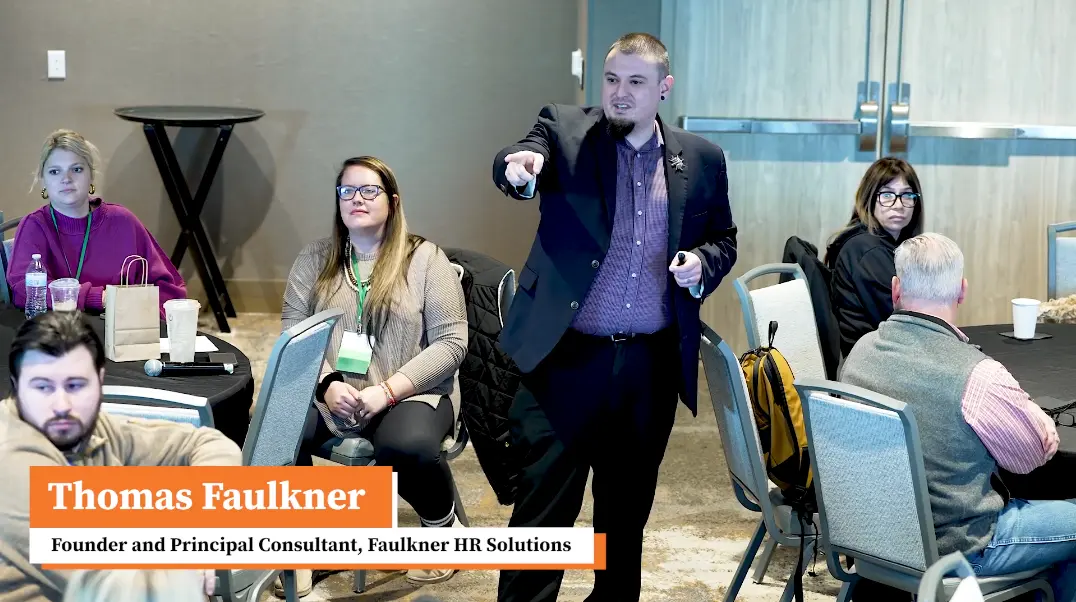
Choosing leadership speakers for organizations should not start with charisma, name recognition, or a polished demo reel. The better question is whether the speaker can support the leadership behaviors your organization actually needs to build. A strong keynote can create momentum, but lasting leadership development requires alignment, reinforcement, and measurable follow-through.
The best leadership speakers for organizations are selected based on audience fit, leadership expertise, practical application, alignment with business goals, and follow-up support. A strong speaker should reinforce a larger leadership development strategy, not replace one.
What Are Leadership Speakers?
Leadership speakers are professionals hired to speak to managers, executives, supervisors, employees, or conference audiences about leadership-related topics. These engagements may include keynotes, workshops, breakout sessions, executive retreats, manager training sessions, or leadership development events.
The best leadership speakers do more than motivate a room. They help organizations clarify expectations, create shared language, introduce practical leadership tools, and connect leadership behavior to real workplace outcomes.
Types of Leadership Speakers for Organizations
Not every leadership speaker serves the same purpose. The right choice depends on the audience, business need, and desired outcome.
Leadership Keynote Speakers
Leadership keynote speakers are typically used for conferences, retreats, annual meetings, and large employee events. Their role is to create alignment, introduce a central message, and give the audience a shared leadership theme.
Corporate Leadership Speakers
Corporate leadership speakers usually focus on workplace leadership topics such as accountability, communication, change, performance, culture, or team effectiveness. They are often brought in to support business priorities or leadership development initiatives.
Executive Leadership Speakers
Executive leadership speakers focus on senior-level leadership issues such as strategy execution, organizational alignment, executive decision-making, enterprise risk, and leading through complexity.
Motivational Speakers for Leaders
Motivational speakers for leaders can help create energy, confidence, and commitment. They are useful when an organization needs momentum, but motivation alone should not be mistaken for leadership capability.
Leadership Training Speakers and Workshop Facilitators
Leadership training speakers and facilitators are usually better suited when the goal is skill development. These sessions may include discussion, scenarios, exercises, role practice, and action planning.
Leadership Keynote Speaker vs. Leadership Training Speaker
A leadership keynote speaker is usually the better fit when the organization needs inspiration, alignment, and a common message. A leadership training speaker is usually the better fit when the organization needs skill practice, behavior change, and applied development.
| Need | Best Fit | Why It Matters |
|---|---|---|
| Kick off a leadership event | Leadership keynote speaker | Creates shared energy and direction. |
| Teach managers a specific skill | Leadership training speaker | Allows practice, feedback, and application. |
| Align executives around a major change | Executive leadership speaker | Connects leadership behavior to strategy and risk. |
| Improve supervisor behavior | Workshop facilitator | Supports real-world application and accountability. |
The problem is not hiring a speaker. The problem is expecting a single event to fix undefined leadership gaps.
When to Hire a Leadership Speaker
A leadership speaker can be a strong investment when the organization has a clear reason for bringing the speaker in. Strong use cases include:
- Launching a leadership development program.
- Reinforcing a major change initiative.
- Creating shared language among managers.
- Supporting an executive retreat or strategic planning session.
- Addressing recurring leadership behavior gaps.
- Helping supervisors connect leadership expectations to daily decisions.
Leadership speakers are most effective when the organization already knows what problem the session is supposed to solve.
When a Leadership Speaker Is Not Enough
A leadership speaker is not enough when the organization has deeper structural problems. A keynote will not fix unclear roles, weak accountability, inconsistent supervision, broken workflows, or managers who were promoted without support.
If managers do not know what leadership behaviors are expected after the event, the organization has purchased inspiration without an operating system.
In those cases, the speaker may still help, but the session should be connected to broader work such as leadership development consulting, training and development consulting, or manager accountability system design.
How to Find a Keynote Speaker for Your Organization
Start with the problem, not the speaker list. Before searching for keynote speakers, define the audience, the leadership issue, the desired behavior change, the event format, and the follow-up plan.
A practical search process looks like this:
- Define the leadership problem the event should address. Is the issue supervisor inconsistency, employee retention, accountability, communication, compliance risk, or change fatigue?
- Decide whether the organization needs a keynote, workshop, retreat, or training session. A keynote can create shared language. A workshop or training session should build applied skill.
- Search for speakers with direct experience in the audience’s world. A polished message matters, but relevance matters more.
- Review whether the speaker provides practical tools, not just polished stories. Inspiration fades quickly when leaders return to unclear expectations, weak systems, or unresolved people issues.
- Ask how the message can be customized. The right speaker should be able to adapt examples, language, and application to your organization’s reality.
- Decide how success will be measured after the event. Useful speaking engagements should support better decisions, clearer conversations, stronger accountability, or improved leadership behavior.
The wrong process starts with, “Who sounds impressive?” The better process starts with, “What needs to change after the event?”
Leadership Speaker Selection Scorecard
Use the following scorecard before booking a speaker. A strong speaker should score well across practical fit, not just presentation style.
| Selection Criteria | What to Look For | Why It Matters |
|---|---|---|
| Audience Fit | Experience with your audience level and industry context. | A message for executives may not work for front-line supervisors. |
| Practical Tools | Frameworks, templates, scenarios, or action steps attendees can use. | People need something to apply after the applause ends. |
| Customization | Willingness to adapt content to your goals and challenges. | Generic leadership advice rarely creates operational change. |
| Leadership Experience | Real-world leadership, HR, operational, or consulting experience. | Credibility increases when the speaker has worked through actual workplace problems. |
| Facilitation Skill | Ability to manage discussion, exercises, questions, and group dynamics. | Workshops require more than strong platform speaking. |
| Goal Alignment | Clear connection between the session and organizational priorities. | The session should support business outcomes, not just event satisfaction. |
| Follow-Up Options | Coaching, workshops, consulting, tools, or implementation support. | Follow-up helps convert insight into behavior. |
| Measurable Outcomes | Defined success measures before the event. | Without measurement, the organization only knows whether people liked the speaker. |
Questions to Ask Before Booking a Leadership Speaker
Before booking a leadership speaker, ask questions that reveal whether the engagement will support real outcomes.
- What leadership problem does this session address?
- What audience is the speaker best suited for?
- Does the speaker customize the session?
- What practical tools will attendees leave with?
- Can the speaker support a workshop, not just a keynote?
- Is follow-up coaching, consulting, or reinforcement available?
- How should impact be measured after the session?
- What should managers do before and after the event?
What the Best Leadership Speakers Have in Common
The best leadership speakers are not always the most famous speakers. For organizations, the better measure is whether the speaker understands the audience, connects the message to real workplace decisions, and gives leaders tools they can use after the event.
Strong leadership speakers usually have five traits:
- They understand the audience’s actual pressure points. Leadership content should reflect the real situations managers, executives, HR teams, and supervisors face.
- They customize the message instead of delivering a generic keynote. The examples, language, and practical takeaways should fit the event and the organization.
- They provide practical language, tools, or frameworks. A strong speaker gives the audience something to use when the meeting ends and the workplace gets complicated again.
- They connect leadership behavior to business, compliance, retention, or performance outcomes. Leadership should not be treated as a personality topic. It affects decisions, systems, risk, and results.
- They help the organization think beyond the event itself. The best leadership speakers help turn a session into a starting point for better follow-through.
A good keynote may energize the room. A strong leadership speaker helps the organization make better decisions after everyone leaves the room.
How Much Do Leadership Speakers Cost?
Leadership speaker fees vary based on experience, customization, travel, session length, audience size, and whether the engagement includes workshops, follow-up coaching, or consulting support.
A short keynote may cost less than a customized leadership workshop or multi-session development engagement. The better budget question is not “How much does the speaker cost?” The better question is “What business outcome should this engagement support?”
If the goal is awareness, a keynote may be enough. If the goal is behavior change, budget for design, facilitation, tools, reinforcement, and measurement.
How to Measure Leadership Speaker ROI
Audience satisfaction matters, but it is not the same thing as impact. A room full of positive feedback forms does not prove that leadership behavior changed.
Better measures include:
- Manager action plans completed after the session.
- Observed behavior change in one-on-ones, delegation, documentation, communication, or coaching.
- Improvement in leadership competency ratings.
- Follow-up participation in workshops or coaching.
- Reduced recurring leadership issues.
- Improved retention, engagement, or performance indicators tied to the session topic.
The strongest measurement approach starts before the event. Define the leadership behavior first, then select the speaker, then measure whether the behavior changed.
What I See Organizations Get Wrong
The most common mistake is hiring a speaker because the organization wants a leadership solution without first defining the leadership problem. The speaker becomes the event. The event becomes the strategy. Then everyone wonders why the same management issues return two weeks later.
Organizations do not usually fail because the speaker was bad. They fail because the message was not connected to expectations, manager routines, performance systems, or follow-up accountability.
Leadership speaking works best when the organization treats the session as a catalyst. Not a cure.
Implementation Checklist for Leadership Speaker Engagements
- Define the leadership behavior the session should support.
- Identify the audience and their current leadership challenges.
- Choose the right format: keynote, workshop, retreat, breakout, or training session.
- Ask the speaker how content will be customized.
- Prepare managers before the event.
- Create an action plan for attendees.
- Schedule follow-up reinforcement.
- Measure behavior change after the session.
- Connect the session to a larger learning and development strategy.
Related Leadership Development Resources
Leadership speakers are more effective when connected to practical development systems. For related guidance, review leadership activities for employees, new manager training, and learning and development strategy.
For organizations that need a speaker who can also connect leadership content to manager behavior, accountability, and operational outcomes, visit leadership speaking or explore leadership development consulting.
About the Author
Dr. Thomas W. Faulkner is an SPHR-certified HR consultant, Lean Six Sigma Black Belt, U.S. Army veteran, and leadership development facilitator. Through Faulkner HR Solutions, he helps Texas municipalities, nonprofits, and growing organizations build leadership systems that connect training, accountability, and operational outcomes.
Dr. Thomas W. Faulkner provides leadership keynotes, HR workshops, and workforce training for organizations that need practical tools, clearer accountability, and real-world application.
If your event needs more than motivational content, review the speaking topics and booking process.
Frequently Asked Questions
A motivational speaker is usually hired to energize an audience, create momentum, or introduce a broad leadership message. A leadership training speaker is usually hired to teach specific leadership skills, facilitate practice, and connect the session to defined leadership behaviors.
Look for a speaker who can define the leadership problem being addressed, customize the session to the audience, provide practical tools, and support follow-up after the event. Measurable results are more likely when the speaking engagement is connected to specific leadership expectations and performance indicators.
No. Leadership speaking engagements can support leadership development, but they should not replace structured training, coaching, feedback, accountability, and real workplace application.
Leadership speaker fees vary based on experience, customization, travel, session length, audience size, and whether the engagement includes workshops, follow-up coaching, or consulting support.
Organizations should ask what leadership problem the session addresses, whether the speaker customizes content, what practical tools attendees receive, whether follow-up support is available, and how the organization should measure impact after the event.
Most organizations do not have a leadership content problem. They have a leadership systems problem that shows up as ineffective development efforts. Fixing that requires more than hiring a speaker. It requires building conditions that help leaders apply what they learn after the event ends.