Employee engagement is often treated as a feel-good checkbox—sporadic surveys, occasional team lunches, or the annual motivational speech. But let's be clear: these surface-level gestures do not move the needle on engagement. The real problem isn't a lack of perks or enthusiasm; it's the absence of a structured, measurable approach to improving workforce engagement. Without a system, engagement efforts become theater—performative and ineffective. If you want to improve employee engagement, you need goals that are not vague aspirations but precise, actionable targets embedded within your organizational infrastructure.
What Are SMART Goals for Employee Engagement?
SMART goals are Specific, Measurable, Achievable, Relevant, and Time-bound objectives designed to create clarity and accountability in organizational initiatives. Applied to employee engagement, SMART goals provide a framework for developing engagement strategies for employees that deliver measurable improvements rather than empty promises. These goals break down broad concepts like “improve employee engagement” into concrete steps that can be tracked, analyzed, and optimized over time.
Most organizations believe employee engagement is about culture or perks. The truth is, engagement is an output of well-designed systems and clear expectations—goals without measurement are just wishful thinking.
Build SMART Goals That Actually Improve Engagement
Define Clear, Specific Engagement Objectives
Begin by identifying what employee engagement means for your organization. General statements like "boost morale" or "increase satisfaction" are too vague to guide action or measurement. Instead, specify particular engagement drivers such as improving communication between managers and teams, increasing participation in professional development, or enhancing recognition programs.
For instance, a specific objective could be "Increase the frequency of one-on-one check-ins between managers and employees from quarterly to monthly." This clear target directs focus and resources effectively, eliminating the guesswork that undermines many workforce engagement ideas.
Being specific also helps in aligning engagement goals with broader organizational priorities, ensuring that engagement efforts contribute to tangible business outcomes like reduced turnover or improved productivity.
Establish Measurable Metrics to Track Progress
Without measurement, employee engagement plans become wish lists. To ensure your engagement strategies for employees are effective, define quantifiable indicators that directly relate to your specific goals. Examples include employee Net Promoter Score (eNPS), participation rates in engagement initiatives, or percentage changes in internal survey responses.
Make sure these metrics are both realistic to collect and meaningful for decision-making. For example, tracking the number of completed professional development sessions per quarter is more actionable than measuring vague “happiness.” Measurement creates accountability in your engagement system and highlights where course corrections are necessary.
Remember, what gets measured gets managed. Without a solid measurement plan, even the best workforce engagement ideas risk becoming episodic events rather than sustained improvements.
Set Achievable and Relevant Targets
Engagement goals must be grounded in reality. Setting impractical targets creates frustration and disengagement. Analyze your current baseline data and organizational capacity to ensure your goals are achievable within the set timeframe.
Relevance is equally critical. Engagement goals should align with the organization's strategic priorities and the unique needs of your workforce. For example, a technology company facing rapid growth might focus on engagement goals tied to onboarding and role clarity, while a nonprofit might prioritize professional development and recognition.
When goals feel attainable and meaningful, employees and managers alike are more motivated to contribute to engagement initiatives, fostering a sense of shared purpose and ownership.
Define a Time-bound Engagement Plan with Accountability
Time-bound goals introduce urgency and discipline to engagement efforts. Define clear deadlines for achieving each objective and establish milestones to monitor progress. Without deadlines, engagement initiatives drift and become forgotten.
Assign accountability to specific roles—whether a manager, HR partner, or a cross-functional team—to own the execution and monitoring of the employee engagement plan. Accountability ensures consistent follow-through and timely adjustments when obstacles arise.
Embedding this discipline into your engagement system prevents the common pitfall where engagement programs launch with enthusiasm but peter out due to lack of sustained ownership and timelines.
Implement Real-World Engagement Initiatives Aligned with Goals
Once SMART goals and metrics are in place, design targeted engagement initiatives that directly contribute to these objectives. For example, if your goal is to increase manager-employee communication frequency, implement a structured one-on-one meeting program with guidance and tracking tools.
Engagement initiatives should be practical, replicable, and integrated into daily workflows rather than isolated events. This integration transforms abstract engagement concepts into concrete behaviors, reinforcing the system and making improvements sustainable.
Regularly evaluate initiative effectiveness using your measurable metrics and refine the approach based on data and feedback. Engagement is not a set-it-and-forget-it activity but an iterative process requiring ongoing attention.
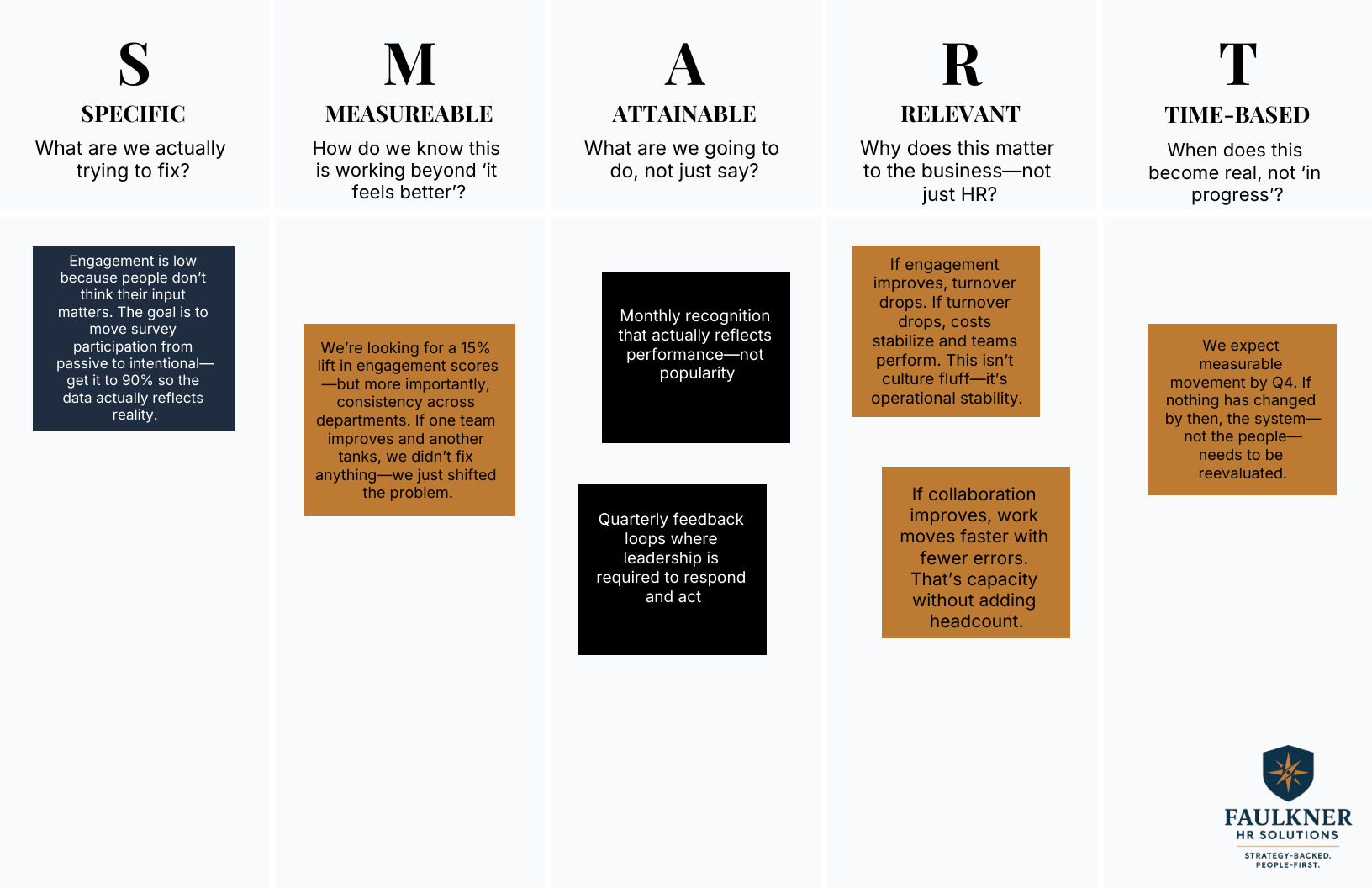
Attempting to improve employee engagement without clear, measurable goals leads to wasted resources and disengagement. Engagement is a system output, not a program.
Common Mistakes When Setting Employee Engagement Goals
Many organizations fall into the trap of confusing activity with impact. Running a town hall or sending an annual engagement survey is not a goal—it’s a tactic. Goals must be tied to observable changes in behavior, attitude, or outcomes. Another frequent failure is neglecting accountability and timelines, which leads to initiatives losing momentum.
Also, beware of setting goals without aligning with organizational strategy or workforce needs. Engagement is not a one-size-fits-all formula. Ignoring your unique context results in irrelevant programs that fail to resonate. Finally, measuring only outputs like attendance or survey completion rates rather than meaningful outcomes like retention or productivity distorts your understanding of success.
Implementation Checklist
- Define specific engagement objectives tied to observable behaviors
- Identify measurable metrics aligned to each objective
- Validate goals for achievability and relevance based on data
- Set deadlines and assign accountable roles for implementation
- Design engagement initiatives directly supporting each goal
- Regularly monitor progress and adjust based on feedback and data
- Embed engagement goals within broader organizational strategy
- Communicate progress transparently across the organization
For organizations seeking to build a robust employee retention and engagement system, these steps provide the foundation. Remember, improving engagement is not a magic pill; it requires engineering a system that supports consistent, measurable improvement.
To deepen your understanding of related workforce stability strategies, see these insights: HR Onboarding Best Practices, New Manager Training That Actually Works, and Employee Documentation Best Practices for Legal Defense.
Frequently Asked Questions
While all elements are important, specificity and measurability are critical. Specific goals clarify exactly what behavior or outcome is expected, and measurable criteria enable tracking progress and determining success.
Engagement goals should be reviewed regularly, at least quarterly. Frequent reviews allow for timely adjustments based on data and employee feedback, ensuring initiatives remain relevant and effective.
No. Managers play a pivotal role in translating engagement goals into daily practices. Their consistent involvement, communication, and accountability are essential to making engagement initiatives effective.
Common pitfalls include setting vague goals, lacking measurement, failing to assign accountability, and treating engagement as a one-time event rather than a continuous system.
SMART goals create a clear system for improving engagement, which is a major driver of retention. Well-defined engagement objectives help address root causes of turnover such as lack of clarity, poor communication, and disengagement.
Most organizations do not have an employee engagement problem. They have a system problem that manifests as disengagement. Building and implementing SMART goals is not a quick fix; it requires deliberate design, measurement, and accountability within your workforce infrastructure. If you’re wrestling with stagnant engagement despite well-intentioned efforts, redefining your approach through structured, measurable goals is the path forward.