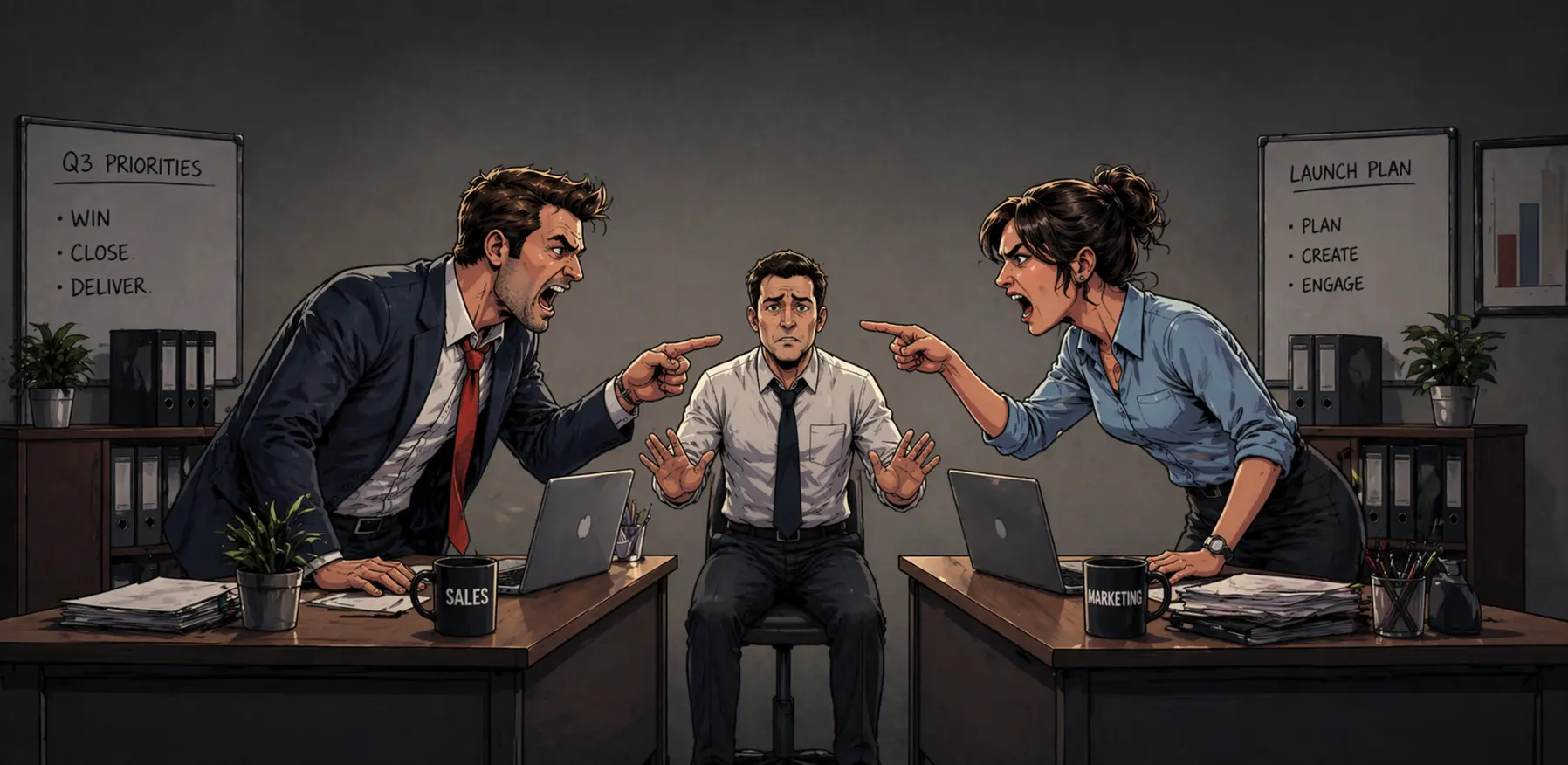
TL;DR: When two employees are not getting along at work, the manager should address the behavior early, document the issue, set clear expectations, and follow up with accountability. The goal is not to make employees like each other. The goal is to restore professional working behavior before the conflict becomes a performance, retention, or HR risk issue.
When two employees are not getting along at work, the manager should address the behavior early, document the issue, set clear expectations, and follow up with accountability. That is the practical answer. Everything else flows from there.
Managers often search for how to handle two employees not getting along after deadlines have already slipped, communication has broken down, and the rest of the team has started feeling the tension. By that point, the real issue is rarely just personality. The real issue is that workplace conflict has been allowed to grow without structure, expectations, or consequences.
That is where employee conflict resolution usually gets mishandled. Leaders delay the conversation, over-focus on feelings, or try to smooth things over without ever addressing the conduct that is disrupting the work. The result is predictable: productivity drops, coworkers get dragged into the tension, and the manager loses credibility because everyone can see the issue but no one is addressing it clearly.
If two employees do not get along, the job is not to force friendship. The job is to resolve conflict at work by restoring professional behavior, protecting team function, and making sure the issue does not spread.
Signs Two Employees Are Not Getting Along
Managers do not need a formal complaint to recognize conflict between coworkers. The warning signs usually show up in operations first. Handoffs become sloppy. One employee stops responding promptly. Messages become longer, colder, and more defensive. People start working around each other instead of with each other.
That is why early employee conflict resolution matters. The longer the tension sits, the more it spreads across the team and the harder it becomes to separate a behavior issue from a broader performance issue.
Common signs of conflict between employees include:
- Missed deadlines or incomplete handoffs between the same two people
- Communication delays, short responses, or passive-aggressive messages
- Repeated errors or duplicated work caused by poor coordination
- Meetings becoming tense, unproductive, or difficult to manage
- Other team members saying they feel caught in the middle
- Escalating complaints about tone, attitude, or cooperation
- One employee consistently avoiding direct interaction with the other
When managers notice these patterns, the response should not be to decide who is right or who is easier to work with. The response should be to identify what behavior is affecting work and address it before it becomes harder to control. That is one of the reasons strong leadership development has to include real conflict handling, not just abstract communication language.
What Managers Usually Get Wrong
Most managers do not fail because they do not care. Most fail because they handle conflict too softly, too late, or too vaguely. They ask employees to “work it out.” They remind everyone to stay professional. They assume tension will fade on its own. Then they act surprised when the same two employees are still creating problems three months later.
That approach does not resolve conflict at work. It delays it.
Managers usually get three things wrong:
- They address attitude instead of behavior.
- They talk once and never follow up.
- They avoid documentation until the issue becomes severe.
When that happens, a manageable employee relations issue turns into a credibility problem for leadership. The team starts learning that conflict is tolerated as long as no one forces a decision.
What to Do When Employees Do Not Get Along
If two employees are not getting along at work, managers need to slow the situation down and deal in facts. That starts with separate conversations. Before putting both employees in the same room, talk to each person individually and keep the focus on observable behavior and work impact.
Do not open with vague language like “I have noticed some tension.” That invites storytelling and defensiveness. Open with what actually happened.
For example: “The handoff for the Tuesday deliverable was late, and the client team had to wait three extra days for the update. Walk me through what happened.”
This matters because a manager handling conflict between employees should focus first on the breakdown in communication, process, or accountability. That keeps the conversation grounded in work instead of drifting into personal opinions about who is difficult.
During each private conversation:
- Ask for facts, not character assessments.
- Clarify what happened, what was expected, and what impact followed.
- Take notes using neutral language.
- Listen for recurring patterns, not just a single frustrating moment.
- Identify whether the issue is behavioral, performance-based, or potentially policy-related.
Documentation starts here. Good documentation protects the organization, gives the manager a defensible record, and makes later action easier if the behavior does not improve. This is a major part of practical HR compliance consulting and one of the most common places managers become inconsistent.
What a Manager Can Say
One reason managers hesitate is simple: they do not know what to say. A direct script helps.
Manager script: “I need to address a breakdown in how the two of you are working together. My concern is not whether you like each other. My concern is whether communication, handoffs, and expectations are being met. I want to walk through what happened, what needs to change, and what the standard is going forward.”
That wording works because it does three things at once. It sets authority, keeps the conversation work-focused, and makes it clear that professional standards matter more than personality differences.
How to Manage Conflict Between Employees
Managers often make conflict worse by treating it like a personality dispute instead of a conduct and accountability issue. A strong manager does not try to force harmony. A strong manager defines the standard for professional behavior and enforces it.
When you are deciding how to manage conflict between employees, use this framework:
- Define the specific behavior that must change. “Be professional” is vague. “Respond to shared project requests within one business day” is actionable.
- Explain the business impact. Describe how the behavior affects timelines, quality, customer experience, workload, or team trust.
- State the expectation clearly. Make it explicit what standard applies going forward.
- Set follow-up checkpoints. Give a timeline for review instead of assuming the issue will solve itself.
- Document the conversation. Record what was addressed, what standard was reinforced, and what next steps were assigned.
- Enforce consequences if needed. If behavior does not improve, move from coaching into formal corrective action.
That structure is what turns workplace conflict into something manageable. Without structure, managers drift into wishful thinking. With structure, managers can resolve conflict at work in a way that is fair, consistent, and defensible.
This is one reason practical new manager training matters so much. Too many supervisors are promoted for technical ability and then left alone to figure out people problems in real time.
When Employee Conflict Becomes a Performance Issue
Not all conflict between coworkers stays interpersonal. At a certain point, the issue becomes a performance and conduct problem.
If two employees continue missing handoffs, disrupting meetings, refusing to communicate, undermining each other, or ignoring clear direction after expectations have been addressed, the organization is no longer managing “tension.” The organization is managing failure to meet professional standards.
That distinction matters. Managers should not wait for an employee relations issue to become dramatic before treating it seriously. Ongoing breakdowns in coordination, communication, or professionalism affect output, morale, and accountability. Once that happens, the issue belongs inside normal performance management, not just informal coaching.
How to Document Employee Conflict
One of the most overlooked parts of employee conflict resolution is documentation. Managers often wait until the problem becomes severe before they start writing anything down. That is backwards. Documentation should begin when behavior starts affecting work, not when the situation becomes formal.
Good documentation focuses on:
- What happened
- When it happened
- Who was involved
- What the impact was
- What expectation was communicated
- What follow-up was scheduled
Bad documentation focuses on opinions, motives, or loaded language. Avoid phrases like “bad attitude,” “immature,” or “always causing drama” unless tied to specific conduct that can be defended later. A defensible record describes behavior and impact, not assumptions about intent.
If managers do not know how to document conflict between employees, the organization usually ends up exposed later when HR is asked to support corrective action with little to no usable record. Strong employee documentation keeps that from happening.
Employee Conflict Resolution Is About Accountability, Not Therapy
A lot of workplace advice gets this wrong. It assumes the solution is to help employees fully understand each other, process emotions together, and rebuild the relationship. Sometimes that can help. Often it is unnecessary.
In most workplaces, the standard is simpler than that. Employees do not have to like each other. Employees do have to meet expectations, communicate respectfully, and avoid conduct that disrupts the work.
That is why effective conflict resolution at work usually sounds less like counseling and more like accountability:
- What happened?
- What was the impact?
- What behavior needs to change?
- What standard applies going forward?
- What happens if the issue continues?
Managers who stay grounded in those questions are far more likely to resolve conflict between team members without turning the situation into an endless emotional negotiation.
The Cost of Ignoring Workplace Conflict
Ignoring conflict between employees is not a neutral decision. It is an expensive one. Unresolved workplace conflict drains time, damages morale, creates avoidable turnover, and can eventually become a formal HR issue if the behavior escalates.
Organizations that take employee conflict resolution seriously tend to protect performance better, stabilize teams faster, and reduce avoidable people problems before they spread. That directly supports stronger employee retention and more consistent operations.
When to Involve HR in Employee Conflict
Managers should handle many day-to-day conflicts themselves, but not every conflict should stay at the manager level. Knowing when to involve HR in employee conflict is part of managing responsibly.
HR should be involved immediately when the issue includes:
- Harassment allegations
- Discrimination concerns tied to a protected class
- Retaliation claims
- Threats, intimidation, or safety concerns
- Repeated misconduct after coaching has already occurred
- Formal discipline, written warnings, or performance improvement action
Managers do not need to wait until the situation becomes explosive to get HR support. If the conflict is creating policy risk or requires formal corrective action, bring HR in early. That keeps the response more consistent and reduces the chance of a sloppy or emotionally driven decision.
For Texas employers, this matters even more because informal handling often turns into inconsistent enforcement, weak documentation, and preventable exposure if the issue later connects to protected activity or alleged unfair treatment.
A Texas Example of Conflict Left Too Long
Consider a mid-sized Texas operation where two supervisors had a running pattern of undermining each other. Project handoffs were delayed. Communication became indirect and hostile. Team members started taking sides. Leadership knew the two supervisors did not get along, but no one addressed the behavior clearly because the assumption was that both were just strong personalities.
That assumption cost the organization. Productivity slipped, avoidable errors increased, and high-performing employees became frustrated with the constant tension. By the time leadership finally stepped in, the issue had already become a broader team performance problem instead of a manageable interpersonal conflict.
The turnaround began only when leadership documented the specific breakdowns, clarified who owned what, set expectations for response times and handoffs, and followed up consistently. The lesson was simple: conflict grows in the space where accountability is missing.
This is why practical organizational development consulting has to address management behavior and role clarity, not just culture language.
Quick Manager Checklist
- Identify the specific behavior affecting work
- Meet with each employee separately first
- Document facts, impact, and expectations
- Set a measurable standard for improvement
- Schedule a follow-up review date
- Escalate to HR if policy risk or formal discipline is involved
If a manager cannot answer what behavior changed, what standard applies, and what follow-up was set, the issue has not been fully managed yet.
Frequently Asked Questions
What is the first step when two employees are not getting along?
The first step is to gather facts separately from each employee. Focus on behavior, missed commitments, communication breakdowns, and work impact. Do not start by asking who is right. Start by identifying what happened and where the process failed.
How should a manager handle conflict between employees?
A manager should address the issue directly, document what happened, define expectations for future behavior, and follow up on whether the conduct improves. The focus should stay on work standards and accountability, not on forcing personal agreement.
How do you handle conflict between coworkers at work?
Handle conflict between coworkers by addressing the specific behavior affecting the work, clarifying what professional standard applies, documenting the issue, and following up. The goal is not to repair every personal difference. The goal is to restore functional working behavior.
Should managers mediate conflict between employees?
Mediation can help in some situations, but it should not be the first or only move. Managers should first clarify behavior, impact, and expectations. Mediation works best after structure is established, not in place of it.
How do you document conflict between employees?
Document the date, the behavior, the people involved, the work impact, the expectations communicated, and the next steps assigned. Keep the language neutral and factual. Avoid opinion-heavy descriptions that cannot be defended later.
When should HR get involved in employee conflict?
HR should be involved when the issue includes harassment, discrimination, retaliation, safety concerns, or repeated misconduct that may lead to formal discipline. HR should also support situations where managers need help maintaining consistency and documentation.
What causes workplace conflict between employees?
Employee conflict often starts with unclear expectations, poor communication, role confusion, inconsistent accountability, or unresolved frustration about workload and behavior. Personality differences can intensify the issue, but weak management structure is often what allows it to keep growing.
Can employee conflict become a legal issue?
Yes. Conflict can become a legal or compliance issue if it involves harassment, discrimination, retaliation, threats, or inconsistent disciplinary handling. That is one reason managers should address behavior early and document it carefully.
What if the conflict does not improve after coaching?
If the behavior continues after expectations have been clarified and documented, the issue should move into formal corrective action. At that point, the organization is not managing a disagreement. The organization is managing a failure to meet professional standards.
Can someone be terminated for not getting along with a coworker?
Not for a simple personality difference alone. However, an employee can be disciplined or terminated for refusing to meet professional standards, disrupting operations, ignoring direction, or continuing behavior that harms team function after clear expectations have been communicated.
How long should managers give employees to improve?
That depends on severity, but managers should set a specific review point rather than leaving the issue open-ended. Two weeks is a reasonable early checkpoint for many situations. More serious conduct issues may require faster escalation.
About the Author
Dr. Thomas W. Faulkner is the founder and principal consultant of Faulkner HR Solutions, a Texas-based firm specializing in strategic HR, leadership development, employee relations, and organizational performance. His work focuses on helping organizations build management systems that reduce turnover, liability, communication breakdowns, and avoidable escalation.
Dr. Faulkner works with municipalities, nonprofits, and growing businesses that need more than generic HR advice. His approach centers on documentation, accountability, management capability, and operational systems that hold up under pressure.
Learn more at faulknerhrsolutions.info/about/.