Public sector organizations across Texas, from rural municipalities to larger county and special district environments, are operating under workforce strain that will not be solved by adding another initiative. The future of public sector HR will not be decided by who launches the most programs. It will be decided by which organizations are willing to stop layering activity onto old structural problems and start treating HR in the public sector as a workforce design function instead of an administrative holding zone.
That distinction matters. A department can run leadership workshops, employee appreciation campaigns, and policy refreshes all year long and still fail to change the conditions that produce turnover, burnout, inconsistent supervision, succession gaps, and fragile operations. The future of public sector HR belongs to organizations that improve the operating system underneath the work, not the ones that simply add more items to the calendar.
- Public sector HR is shifting from administrative support to workforce system design.
- HR solutions for public sector organizations must focus on leadership readiness, supervisor effectiveness, and operational accountability.
- HR in the public sector will create more value when it fixes role clarity, workflow breakdowns, and fragile management systems.
- Strong public sector HR strategy is measured by workforce stability and decision quality, not by the number of programs launched.
Why Listen to Me?
I'm Dr. Thomas Faulkner, founder of Faulkner HR Solutions. My work focuses on helping Texas organizations strengthen workforce stability, leadership accountability, HR compliance, and operational effectiveness through practical system design. That includes public entities that need more than generic training or off-the-shelf HR advice.
I hold a Doctorate in Business Administration, the SPHR credential, and a Lean Six Sigma Black Belt. More importantly, the frameworks I use come from real organizational work, including municipal environments where weak supervision, thin staffing, institutional knowledge loss, and operational bottlenecks create consequences that no glossy program can fix. If your organization is looking for stronger public sector HR consulting in Texas, that is the lens behind this article.
The Future of Public Sector HR Strategy in 2026 and Beyond
The future of public sector HR is not a branding exercise. It is a structural response to pressure that is already here: retirements, supervisor inconsistency, weak onboarding, political scrutiny, thin staffing, and growing service complexity. Public organizations that keep treating these issues as isolated events will stay in reaction mode. Public organizations that treat them as system design failures will build a more resilient workforce.
That shift is why HR in public sector organizations must move beyond form processing and policy interpretation alone. Compliance still matters. Documentation still matters. Labor discipline still matters. But those functions do not replace the need for stronger workforce architecture. The next phase of public sector HR strategy is about designing environments where better management, clearer accountability, and stronger service continuity are more likely by default.
Why Public Sector HR Transformation Keeps Stalling
Ask many public sector HR leaders whether their function is strategic and the answer will usually be yes. Then ask harder questions. What changed in the last budget cycle because of HR's recommendation? What leadership failures were corrected because HR identified a systemic risk? What critical capability gaps are mapped against upcoming retirements? Those answers usually expose the real problem.
The gap between how organizations describe HR and what HR actually changes is where most workforce instability lives. That gap is not usually caused by bad motives. It is caused by a system that keeps producing the same outcomes because nothing underneath the outcomes has been redesigned.
If the same workforce problems keep returning through different programs, managers, and budget cycles, the problem is not the program. The problem is the system the program is being dropped into.
From Administrative Checkpoint to Strategic Architect
Many public sector HR departments still operate as checkpoints. They process forms, interpret policy, advise on discipline, and help hold the compliance line. That work matters, but it is not enough. A function that only protects the organization from procedural error does not shape workforce performance. It reacts to failure after the fact.
Strategic HR in the public sector should design the conditions under which employees and managers can perform consistently. That means clarifying roles, strengthening manager expectations, building knowledge transfer pathways, tightening hiring and onboarding systems, and installing accountability mechanisms that survive conflict. That is design work. Most agencies say they want that kind of HR. Fewer are structured to let HR do it.
The Program-First Fallacy
Public sector HR transformation often stalls because organizations target programs instead of structure. They see disengagement and launch morale efforts. They see turnover and tweak recruiting ads. They see weak managers and send them to training. Then they wonder why the same problems come back six months later.
A better question is simpler and harder: What in the system is producing this result? That question changes everything.
- Chronic turnover is often not a recruiting problem. It is a role clarity, supervisory quality, or workload design problem.
- Weak accountability is often not a personality problem. It is a failure in standards, follow-through, and consequence pathways.
- High-performer burnout is often not a resilience problem. It is a bad operating model that keeps rewarding competence with overload.
None of those issues are solved by adding another stand-alone program. They are solved by redesigning the structure that keeps reproducing the same pain points.
Why HR in the Public Sector Needs Better Systems, Not More Programs
HR in the public sector is often asked to do everything at once: maintain compliance, respond to employee relations issues, assist leadership, support hiring, modernize policies, and stabilize retention. That breadth is not the problem. The problem is when organizations expect those outcomes without redesigning the systems that produce them.
Public agencies do not usually suffer from a lack of effort. They suffer from weak handoffs, unclear decision rights, poor role design, informal workarounds, and managers who inherit responsibility without practical readiness. When that happens, even well-intended HR solutions for public sector organizations will underperform because the structure around them is broken.
That is why agencies seeking stronger outcomes should not just search for generic HR support. They should look for HR solutions for public sector organizations in Texas that address the operating system itself: supervision, accountability, workflow design, workforce readiness, and succession risk.
Public Sector Succession Planning Is Really a Readiness Problem
The retirement problem in public service is widely discussed, but succession conversations often stay too shallow. Listing who might replace whom is not the same as measuring whether the organization is actually prepared to absorb the loss of critical skill, judgment, authority, and institutional memory.
If several experienced employees left tomorrow, what would your organization actually lose? Which unofficial workarounds would disappear with them? Which relationships, decisions, and judgment calls are sitting inside one person's head? If the answer is unclear, the organization does not have a succession system. It has assumptions.
Tenure is not readiness. A long-serving employee may understand a function deeply and still be unprepared to lead under political pressure, manage conflict, or make operational decisions in ambiguity.
Why Vacancy Charts Fail
Too many succession plans reduce the issue to boxes on a chart. They identify likely replacements without evaluating whether those employees have the practical decision-making experience required for the next role. That is not a readiness strategy. It is a hope strategy.
Real readiness requires development against actual role conditions. That means preparing future leaders to hold standards, communicate through tension, manage complexity, protect service continuity, and exercise judgment when the answer is not written in a manual.
Case Example: When the Successor Wasn't Ready
Consider a Texas municipality where a long-serving Public Works leader planned retirement. Leadership believed an internal successor was already identified. On paper, the transition looked stable. In practice, the designated replacement had not been tested in the core demands of the role. Procurement experience was present, but broader operational leadership was not. Council communication, political navigation, cross-functional coordination, and crisis decision-making had not been developed with intention.
That kind of gap is not unusual. It becomes visible only when organizations stop asking who has been around the longest and start asking who has demonstrated readiness for the real demands of the next seat.
What Public Sector Supervisor Training Should Actually Do
Most agencies can say they train supervisors. Fewer can say what the training actually equips them to do once conflict, scrutiny, labor pressure, public complaint, or political friction shows up. That difference matters.
Too much supervisor development prepares managers for the easy version of the role. Then a high-performing technician gets promoted, documentation slips, accountability softens, conflict is avoided, and HR ends up cleaning up downstream damage that was predictable from the moment the person was elevated without real-world readiness.
| Supervisor Readiness Area | What Weak Training Produces | What Strong Public Sector HR Strategy Produces |
|---|---|---|
| Accountability | Managers avoid hard conversations until the issue escalates. | Managers address performance early, consistently, and with documentation. |
| Documentation | Supervisors document after the problem becomes formal. | Supervisors create timely records that support sound decisions. |
| Conflict Response | Managers personalize conflict or delay intervention. | Managers apply standards under pressure and manage tension professionally. |
| Decision Quality | Managers rely on habit, emotion, or politics. | Managers use clearer expectations, judgment, and escalation pathways. |
| Operational Stability | HR cleans up downstream consequences after avoidable failures. | Leadership issues are reduced before they become service disruptions. |
Training Should Prepare Supervisors for the Hard Version of the Job
Good public sector supervisor training should prepare leaders to do more than recite policy. It should prepare them to apply standards when there is pressure to bend them. It should prepare them to document clearly, address performance early, respond to complaints appropriately, and hold steady when emotions, politics, or grievance risk enter the room.
In other words, supervisor training should not be measured by attendance. It should be measured by whether supervisor behavior improves under real operational conditions.
Training Without Reinforcement Will Fail
Even strong content will underperform if the environment around the supervisor does not reinforce it. Before buying another training program, agencies should ask a few basic questions:
- Are expectations clear before the training begins?
- Will the supervisor's own manager reinforce the behaviors afterward?
- Does the workflow support the standard being taught?
- Is there any consequence when the training is ignored in practice?
If the answer to those questions is no, the issue is not training quality alone. The issue is system alignment.
How HR Solutions for Public Sector Organizations Must Evolve
Many HR solutions for public sector agencies are still sold as isolated fixes. A training package here. A policy refresh there. A recruiting tune-up somewhere else. Those can help, but only if they are attached to a larger operating logic. Without that, organizations end up buying activity instead of building capacity.
Better public sector HR solutions do at least four things well. They diagnose before prescribing. They distinguish symptom from cause. They reinforce manager behavior after training ends. They tie HR work to operational outcomes leaders can actually feel: turnover, delay, conflict frequency, decision consistency, service stability, and readiness under pressure.
- Manager effectiveness and supervisory accountability
- Hiring and onboarding systems that reduce early failure
- Succession readiness instead of paper-based replacement charts
- Workforce system design that survives turnover and pressure
How to Start Building the Future of Public Sector HR
Agencies do not need a dramatic reinvention overnight. They need disciplined diagnosis, clearer priorities, and the willingness to address root causes instead of decorating symptoms.
1. Audit HR by Impact, Not Activity
Start by reviewing current HR work through a stricter lens. Where is HR changing operations, decision quality, leadership accountability, or workforce stability? Where is it simply processing requests and reacting to issues? A more honest audit creates the foundation for stronger design decisions. If that process sounds familiar, it is because true HR process improvement strategies for public sector organizations start by identifying what the current structure is actually producing.
2. Map the Workforce Systems That Matter Most
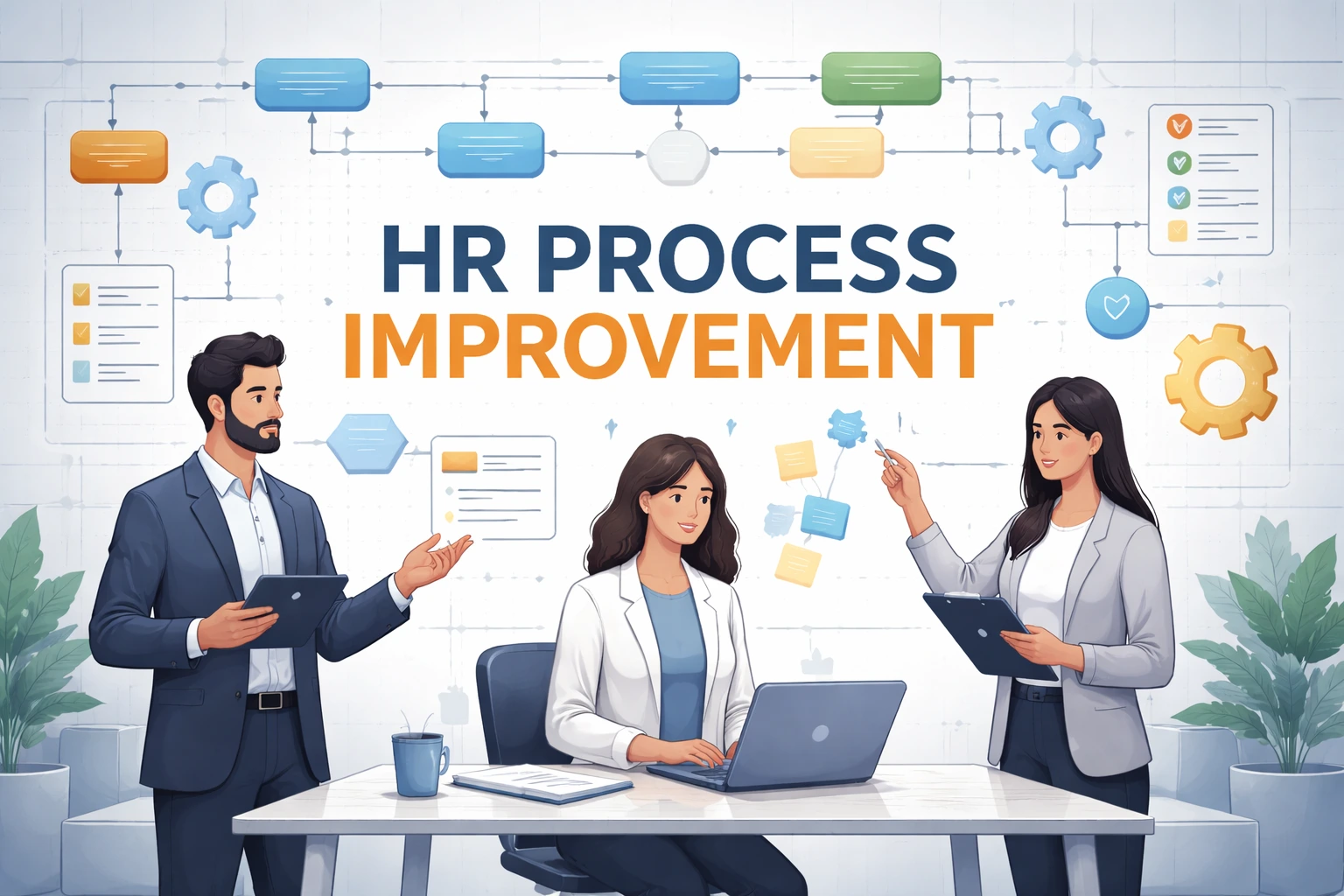
Visually map the systems that shape workforce outcomes: hiring, onboarding, supervision, performance management, succession, and leadership development. Identify bottlenecks, unclear handoffs, duplicated effort, informal workarounds, and decision points with no real ownership. The goal is not a pretty process map. The goal is to expose where performance and accountability break down.
3. Build Leadership Readiness Instead of Assuming It
Do not confuse strong technical experience with leadership preparedness. High-potential employees need structured exposure to the real demands of the next role. That includes pressure, ambiguity, difficult conversations, documentation expectations, political scrutiny, and judgment calls that affect service continuity. Public organizations that want stable leadership benches should build readiness intentionally through stronger leadership development consulting for public sector supervisors, not wait for vacancies to expose the gaps.
4. Align HR Structure With Public Sector Reality
Agencies should assess whether their current HR function is positioned to influence operations or merely respond to problems. In many environments, stronger outcomes require a clearer strategic role for HR, better access to leadership decision-making, and a more deliberate approach to public sector HR consulting that addresses the realities of government workforce management.
The future of public sector HR is not about doing more. It is about building systems that make better performance, stronger leadership, and cleaner accountability more likely by design.
Conclusion: Better Systems Beat More Programs
The future of public sector HR will not belong to organizations that stay busiest. It will belong to organizations that build stronger workforce systems, prepare leaders before the vacancy hits, and stop mistaking activity for strategy. That shift requires honesty, operational discipline, and a willingness to redesign what is no longer working.
For Texas municipalities and public agencies, the question is no longer whether workforce strain is real. The question is whether leadership is willing to treat HR in the public sector as a serious design function capable of fixing the underlying system. That is where the next era of public sector HR begins.
If your agency is dealing with supervisory inconsistency, succession risk, or workforce instability, book a strategy call to identify the system-level breakdowns behind the symptoms.
Frequently Asked Questions About Public Sector HR
What is the future of public sector HR?
The future of public sector HR is shifting from administrative support toward workforce system design, leadership accountability, supervisor readiness, and operational stability.
Why is HR in the public sector struggling in many organizations?
HR in the public sector often struggles when organizations rely on disconnected programs instead of fixing structural issues such as weak supervision, unclear accountability, poor role design, and fragile workforce systems.
What are effective HR solutions for public sector organizations?
Effective HR solutions for public sector organizations focus on system design, stronger supervisor expectations, succession readiness, hiring and onboarding improvement, and clearer operational accountability.
How can public sector organizations improve workforce stability?
Public sector organizations improve workforce stability by auditing HR impact, mapping core workforce systems, strengthening manager effectiveness, and preparing future leaders before vacancies expose the gap.