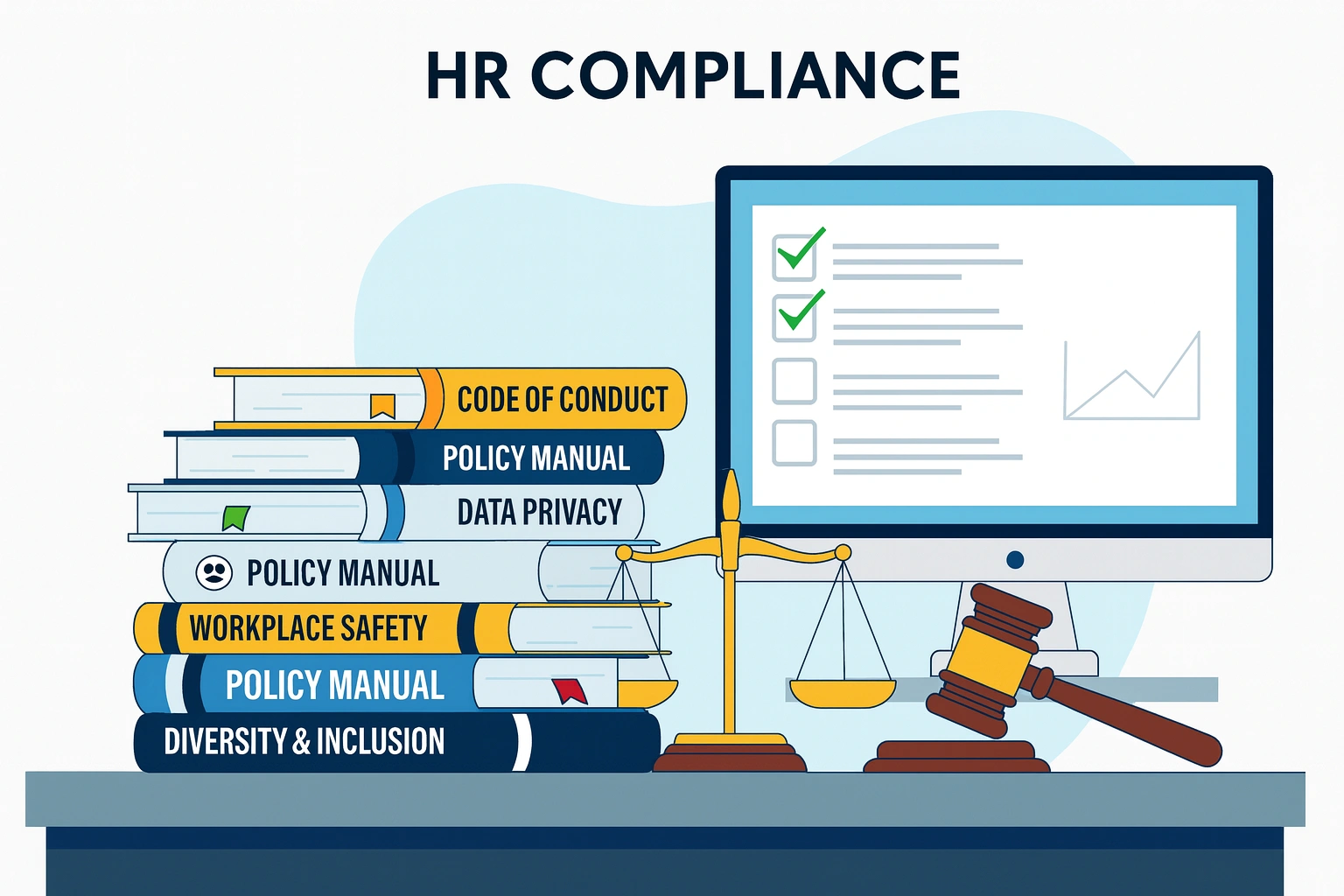
San Antonio HR compliance for small businesses usually comes down to five things: written policies, worker classification, manager training, documentation, and regular review. Most small employers do not get into trouble because they intended to ignore the rules. They get into trouble because their people systems never kept up with growth.
Local compliance problems often look ordinary at first. A handbook has not been updated in years. One manager handles time off one way while another handles it differently. A contractor relationship slowly starts looking like employment. Personnel files are incomplete. Training is informal. Nothing feels dramatic until a complaint, wage issue, audit, or termination dispute forces the business to prove what it has actually been doing.
If that sounds familiar, the problem is not just compliance. The problem is system drift. Small employers in San Antonio often need practical HR compliance help that fixes the structure underneath the issue, not just the symptom sitting on top of it.
What San Antonio HR Compliance Means for Small Businesses
For small businesses, HR compliance is not a single policy or checklist. It is the ongoing alignment of employment practices, manager behavior, documentation, and internal systems with what the business says it does. In practice, that usually means maintaining a current employee handbook, classifying workers correctly, documenting employee issues consistently, training managers, and reviewing HR practices before they create avoidable liability.
That is why businesses looking for HR compliance consulting in Texas are often not looking for abstract legal theory. They are looking for help fixing the exact pressure points that keep creating risk: handbook gaps, inconsistent practices, weak records, and outdated policies.
Most San Antonio compliance issues are not hidden in exotic legal traps. They are sitting in ordinary workflows that no one has cleaned up yet.
When to Hire an HR Compliance Consultant in San Antonio
Many small employers wait too long to get help because they assume HR compliance support is only for large organizations or businesses already in legal trouble. In reality, the best time to bring in a consultant is earlier, when the business can still fix the problem without cleaning up a larger mess later.
You should strongly consider outside help when:
- Managers answer the same policy question differently.
- Your employee handbook is outdated or incomplete.
- You are using contractors but have not reviewed classification risk recently.
- Documentation is inconsistent across departments.
- Supervisors have authority but no real training.
- You have grown faster than your people systems.
- You are preparing for expansion, turnover reduction, or tighter accountability.
What a Compliance Consultant Can Help You Fix
Most small businesses do not need a giant HR department. They need the right problems fixed in the right order. A good consultant helps identify where risk is building, clean up weak systems, and create a more consistent operating structure for managers and employees.
- Outdated or incomplete employee handbooks
- Policy drift between written expectations and manager behavior
- Worker classification issues involving contractors and hybrid roles
- Weak or inconsistent documentation practices
- Missing manager training around discipline, complaints, and employee relations
- Overdue HR audits and unresolved compliance gaps
- Onboarding and training processes with poor documentation
- Employee relations problems caused by unclear standards or uneven enforcement
Businesses usually reach this point after something stops working. Policies no longer line up with how managers operate. Documentation is inconsistent. Questions about pay, leave, or discipline do not have clear answers. At that stage, the issue is not whether something is off. The issue is how far the problem has already spread.
Why Small-Business Compliance Gets Overlooked
Small employers are often balancing growth, customer needs, staffing pressure, and daily operations with limited administrative capacity. The result is predictable: processes that feel good enough get left alone because they are not screaming for attention yet.
This is especially common among Bexar County and San Antonio-area employers that have grown through speed, loyalty, and necessity but never had time to formalize people systems. Across South Texas, that pattern shows up in founder-led companies, field-based employers, healthcare-adjacent operations, and service businesses where managers carry authority without consistent HR infrastructure behind them.
That is how policy drift happens. It is how undocumented expectations become “the way we do things.” It is how onboarding turns into shadowing, discipline turns inconsistent, and documentation starts to depend on which manager happened to handle the issue. The business keeps moving until it collides with a complaint, a wage problem, or a preventable employee dispute.
The risk usually is not one dramatic mistake. The risk is a pattern of smaller, tolerated gaps — our Texas HR compliance guide for small businesses covers the statewide version of that same pattern.
The Five Most Overlooked Compliance Mistakes
The most expensive compliance problems are usually not the flashy ones. They are the ordinary operational weaknesses that remain uncorrected long enough to become costly.
1. Missing or Outdated Employee Handbooks
A surprising number of small businesses still operate with policies that are partly verbal, partly inherited, and partly guessed at by managers. That creates inconsistency immediately. One supervisor interprets attendance one way, another handles time off differently, and a third documents discipline only when already frustrated. Employees see the inconsistency long before leadership does.
This is why employee handbook work is not cosmetic. A strong handbook creates a central reference point for expectations, complaints, leave, conduct, technology use, documentation, and manager decisions. It does not eliminate every risk, but it removes a major source of avoidable confusion.
If handbook language is outdated or the business has no real handbook, start with a deliberate review of Texas employee handbook requirements and policy structure, then connect that work to your actual day-to-day practices. A handbook that does not match real operations is still a problem.
Businesses usually seek handbook help after inconsistency becomes visible. Managers are giving different answers, expectations feel unclear, and policy gaps are starting to create operational friction.
2. Worker Misclassification and 1099 Risk
Misclassification remains one of the easiest ways for a small business to create hidden liability while thinking it is being efficient. The logic usually sounds familiar: the worker is flexible, the arrangement is informal, and using a contractor feels simpler than adding payroll complexity. But convenience does not decide classification.
When a worker functions like part of the business, follows the company’s operating expectations, uses company systems, and is treated like a regular member of the workforce, classification deserves closer scrutiny. This is especially important for fast-growing small employers using contractors to keep up with demand.
A classification review should be part of any meaningful HR audit process. If contractor relationships have been running on habit instead of analysis, that is not a minor oversight. That is a liability question.
3. Inconsistent Manager Practices and No Real Training
Many compliance problems are not caused by malicious supervisors. They are caused by unprepared supervisors. A manager with authority but no structured training will often improvise through hiring, discipline, documentation, leave questions, and performance conversations. That improvisation creates uneven treatment and weak records.
Manager inconsistency is one of the biggest hidden drivers of local compliance trouble because it turns policy into personality. The same issue gets handled differently depending on who is in charge, which means the business loses credibility internally and creates risk externally.
That is why manager readiness is a compliance issue, not just a leadership issue. If supervisors are expected to touch discipline, hiring, complaints, attendance, leave, or documentation, they need training that reflects that reality.
4. No Regular HR Audit Schedule
Many small employers treat HR compliance as a one-time setup task. A handbook gets created. A few forms get gathered. A process is built once. Then it sits untouched while the business changes around it. That is how once-reasonable systems quietly become stale.
A good audit does not just look for missing paperwork. It looks for drift between what leadership believes is happening and what managers and employees are actually doing. That includes records, wage and hour practices, training evidence, handbook alignment, onboarding, classification, complaint handling, and documentation discipline.
For many businesses, an audit is the first time leadership sees the full shape of the problem. It reveals whether risk is isolated or spread across multiple workflows that have been left on autopilot for too long.
5. Poor Documentation and Recordkeeping
Documentation problems do not feel dramatic until the business has to prove what happened. If attendance issues were discussed but never documented, if training happened informally but no record exists, or if discipline was handled verbally across multiple supervisors, the organization may have very little to stand on when challenged.
Good documentation is not about bureaucracy for its own sake. It is about consistency, credibility, and being able to show that the business has standards and follows them. That includes employee files, performance records, training completion, policy acknowledgments, corrective action notes, wage records, and separation records.
Weak documentation is one of the fastest ways small employers create unnecessary vulnerability. It is also one of the fastest things to improve once leadership decides to take it seriously.
What Employers Usually Need Help Fixing First
Across Texas small employers, the same themes appear again and again: outdated handbooks, uneven manager enforcement, unclear leave handling, weak documentation, and growth that outpaced internal structure. The details vary by industry, but the pattern is consistent. Businesses rarely struggle because leadership does not care. Businesses struggle because the operating system underneath the workforce was never fully built.
Most local employers do not need a giant HR transformation to lower compliance risk. They usually need a tighter version of a few core systems.
- Employee handbook review and rewrite
- Policy alignment between what is written and what managers actually do
- Worker classification review for contractors and hybrid roles
- Manager training around documentation, discipline, and employee relations
- HR file cleanup and documentation standards
- Annual or periodic HR audits tied to actual operational risk
- Clear onboarding and training records
- Stronger complaint handling and follow-through
That is the real shape of small business HR compliance. It is not theoretical. It is a series of practical fixes that reduce confusion, improve manager consistency, and close avoidable risk gaps.
How to Reduce HR Compliance Risk Without Overbuilding
Small employers do not need corporate theater. They need a practical sequence that fits real operations. A strong starting point usually looks like this:
- Review the employee handbook and current policies for drift, gaps, and inconsistency.
- Audit contractor relationships and worker classification logic.
- Train managers on documentation, discipline, complaints, and escalation.
- Standardize recordkeeping across the employee lifecycle.
- Create a repeatable HR audit schedule instead of waiting for pain.
That sequence is often enough to move a small business from exposed and reactive to far more stable. It is also how local employers can improve compliance without building a bloated HR function that does not match their size.
How This Connects to Broader Texas HR Strategy
San Antonio businesses do not operate in a vacuum. The local issues in this article are the city-level version of problems every Texas small employer faces: compliance structure, handbook quality, manager accountability, and systems that support growth without creating unnecessary risk.
If you want the statewide picture, the Texas HR compliance guide for small businesses walks through wage law, recordkeeping, classification, and required postings. If the handbook is your weak point, the Texas employee handbook guide covers what belongs in it, what is optional, and what is commonly missing.
- Your handbook has been updated within the last 12 to 24 months
- Managers answer policy questions consistently
- Contractor classifications have been reviewed recently
- Documentation standards are consistent across departments
- Training completion can be verified with records
- Employee files are organized and current
- An HR audit schedule exists instead of waiting for problems
If several of those are not true, the business likely does not have a minor paperwork issue. The business likely has a system issue that is already creating hidden risk.
Need Help Fixing San Antonio HR Compliance Problems?
If your policies are inconsistent, your handbook is outdated, your managers are improvising, or your documentation is not where it should be, the issue is bigger than one isolated compliance task. The issue is that the business has likely outgrown the people systems it has been relying on.
That is where targeted support matters. Faulkner HR Solutions helps Texas organizations strengthen HR compliance through handbook work, audits, documentation cleanup, manager guidance, and practical system design. Explore HR compliance consulting, HR audit consulting, and related service support designed for real-world operations.
Frequently Asked Questions
Most small businesses in San Antonio should have a written employee handbook because undocumented policies create inconsistency, confusion, and legal risk. A handbook helps standardize expectations around leave, discipline, complaints, pay practices, and workplace conduct.
Common issues include outdated or missing handbooks, worker misclassification, poor documentation, inconsistent manager practices, weak onboarding, missing training records, and failure to perform regular HR audits.
At a minimum, businesses should review policies and core HR records annually. Higher-risk organizations or businesses growing quickly may need more frequent audits of wage and hour practices, worker classification, documentation, and manager compliance.
Worker misclassification can create back wage exposure, tax issues, audit risk, and legal liability. Businesses should review contractor relationships carefully and document why a role is classified the way it is.
Yes. An HR consultant can help review handbook language, align policies with current practice, identify compliance gaps, train managers, and build stronger systems for documentation and accountability.
A small business should consider HR compliance help when policies are outdated, managers answer policy questions differently, documentation is inconsistent, audits are overdue, or leadership is growing faster than its people systems.
Related HR Questions, Answered
Direct answers from our HR FAQ library for Texas employers: