Leadership coaching services can be useful when managers need more than another training session and executives need more than generic advice. The problem is that many organizations buy coaching without defining what leadership behavior needs to change. That is how coaching turns into polished conversation instead of measurable development. Effective coaching should clarify expectations, isolate specific leadership behaviors, connect those behaviors to business outcomes, and reinforce the new habits through real work.
Faulkner HR Solutions provides leadership coaching and leadership development consulting for Texas municipalities, nonprofits, and growing organizations that need manager behavior to improve in real operating conditions.
Practitioner note: This guidance is based on Dr. Thomas W. Faulkner’s experience designing leadership, HR, and workforce systems for municipalities, nonprofits, and growing organizations where manager behavior directly affects retention, compliance, employee trust, and operational performance.
Who Needs Leadership Coaching Services?
Leadership coaching services are a strong fit for organizations with new managers, promoted technical experts, executives leading change, supervisors struggling with accountability, or high-potential employees preparing for larger roles. Coaching is most useful when the issue is not knowledge alone but inconsistent leadership behavior under real workplace pressure.
Organizations should consider coaching when supervisors know what they are supposed to do but struggle to follow through consistently. That may include managers who avoid performance conversations, fail to delegate clearly, delay documentation, create confusion during change, or depend too heavily on personality instead of repeatable leadership habits.
What Are Leadership Coaching Services?
Leadership coaching services are professional coaching engagements designed to develop a manager, supervisor, executive, or emerging leader through targeted, individualized support. These services focus on observable behavior, decision-making, communication, delegation, accountability, and leadership consistency rather than vague personality traits.
Strong leadership coaching programs create a direct connection between individual behavior and organizational outcomes. The goal is not self-awareness as an endpoint. The goal is self-awareness that improves how a leader acts, communicates, follows through, and supports performance.
Most leadership coaching fails because it focuses on attitudes instead of measurable behaviors. Leadership is not just a personality trait. It is a set of practiced behaviors that must show up under pressure.
Executive Coaching Services vs. Leadership Coaching for Managers
Executive coaching services usually focus on senior-level decision-making, strategic influence, organizational alignment, executive presence, board or stakeholder communication, and the leader’s ability to guide change across complex systems. The coaching often centers on how the executive thinks, decides, communicates risk, and shapes organizational direction.
Leadership coaching for managers is usually more operational. Managers need coaching on delegation, difficult conversations, performance follow-up, workload coordination, accountability, and team communication. The work is less about executive presence and more about whether the manager can lead daily work without avoidance, confusion, or inconsistency.
The distinction matters. A frontline manager struggling to address performance needs a different coaching structure than an executive preparing to lead a major organizational transition. Effective professional coaching services should be designed around the leader’s role, authority level, risk exposure, and actual work conditions.
Leadership Coaching Benefits for Organizations
The strongest leadership coaching benefits appear when coaching is tied to real operational problems. Coaching can improve communication, reduce manager avoidance, strengthen delegation, improve conflict management, and create more consistent accountability across teams.
Organizations often invest in leadership coaching services when they see symptoms such as turnover, low morale, inconsistent supervision, poor follow-through, unclear expectations, or managers who avoid necessary conversations. In those situations, coaching should not be treated as a perk. It should be treated as a focused intervention to improve leadership behavior that affects business performance.
- Improved accountability: Leaders learn how to define expectations, address gaps, and follow through without creating unnecessary conflict.
- Better communication: Managers practice how to communicate decisions, priorities, feedback, and expectations clearly.
- Stronger retention conditions: Employees are less likely to disengage when leadership behavior is consistent, fair, and understandable.
- Improved change readiness: Leaders learn how to guide teams through operational change without relying on vague motivational language.
- More useful performance conversations: Coaching helps managers move from general opinions to specific, behavior-based feedback.
Why Traditional Leadership Coaching Often Fails
Many coaching programs emphasize soft skills through one-off workshops or motivational sessions that create a temporary boost in enthusiasm but no lasting change. The missing piece is a system that integrates coaching into the everyday workflow with accountability mechanisms.
Unstructured engagements often lack clarity on what success looks like. When development outcomes are vague or unmeasured, coaching becomes a series of feel-good conversations rather than skill-building. That disconnect leads to wasted resources and frustration among stakeholders who expected real results.
Leadership coaching engagements that lack a structured feedback loop and reinforcement cycle rarely produce sustainable behavior change. Enthusiasm after a session is not evidence of development.
What a Leadership Coaching Engagement Can Include
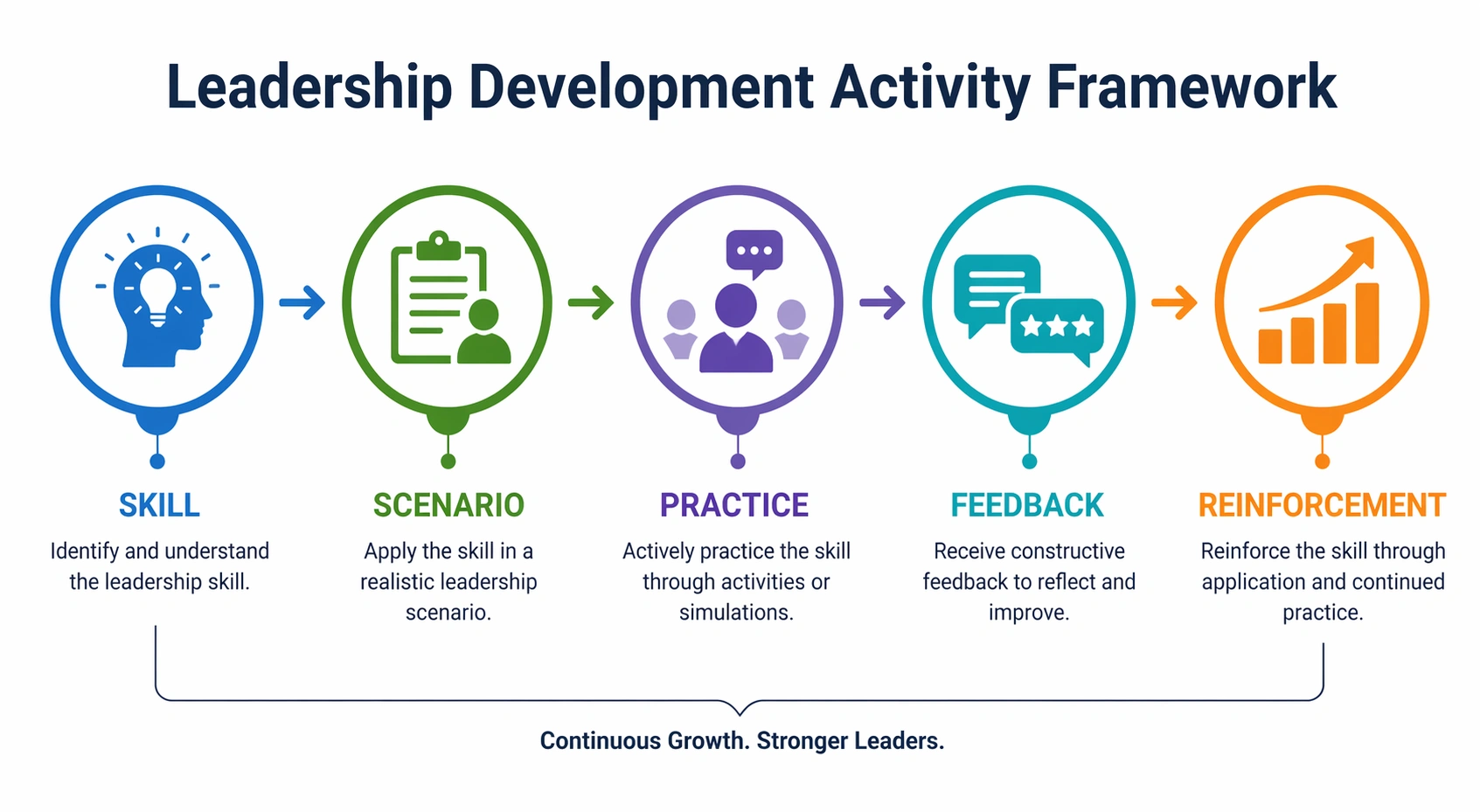
A structured leadership coaching engagement should give the organization more than private conversations between a coach and a leader. The engagement should define what will be developed, how progress will be reviewed, and how new leadership behaviors will be reinforced in the leader’s actual work environment.
- Initial leadership behavior assessment
- Manager or executive coaching sessions
- Role-specific leadership development goals
- Between-session application assignments
- Feedback review and progress tracking
- Optional alignment with performance management, succession planning, or supervisor training
Faulkner HR Solutions helps organizations build leadership coaching programs tied to real manager behavior, accountability, communication, and workforce outcomes. Schedule a consultation.
What Strong Leadership Coaching Programs Include
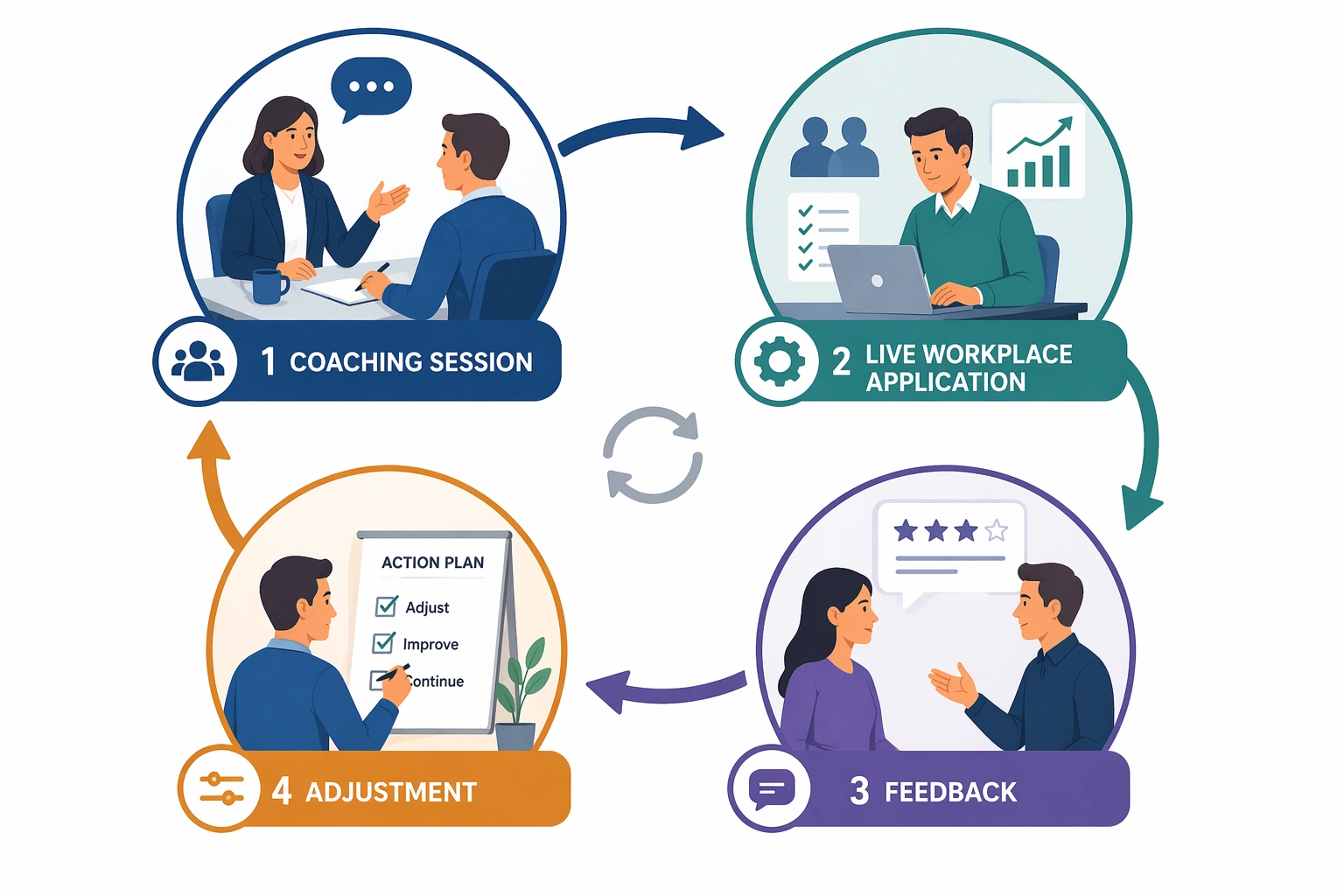
Effective leadership coaching programs are structured around four interdependent components. Each component matters because behavior change does not happen through reflection alone.
Skill Isolation: Focus on Specific Leadership Behaviors
Effective coaching begins by isolating key leadership behaviors that directly impact team and organizational performance. This means moving beyond generic traits like confidence and targeting actionable behaviors such as giving constructive feedback, delegating appropriately, documenting expectations, and managing conflict.
Real-World Pressure: Application Under Stress
Leadership skills are not built in a vacuum. Coaching programs that incorporate real-world pressure help leaders apply new skills in their actual work context. That may include preparing for a difficult conversation, navigating a team conflict, leading a change initiative, or correcting performance inconsistency.
Feedback Loop: Structured and Timely
Without consistent, structured feedback, coaching becomes guesswork. A functional feedback loop includes regular check-ins, stakeholder input, behavior-based observations, and clear metrics on leadership behaviors. Feedback tied to a specific, recent behavior is what changes future behavior.
Reinforcement Cycle: Sustaining Behavior Change
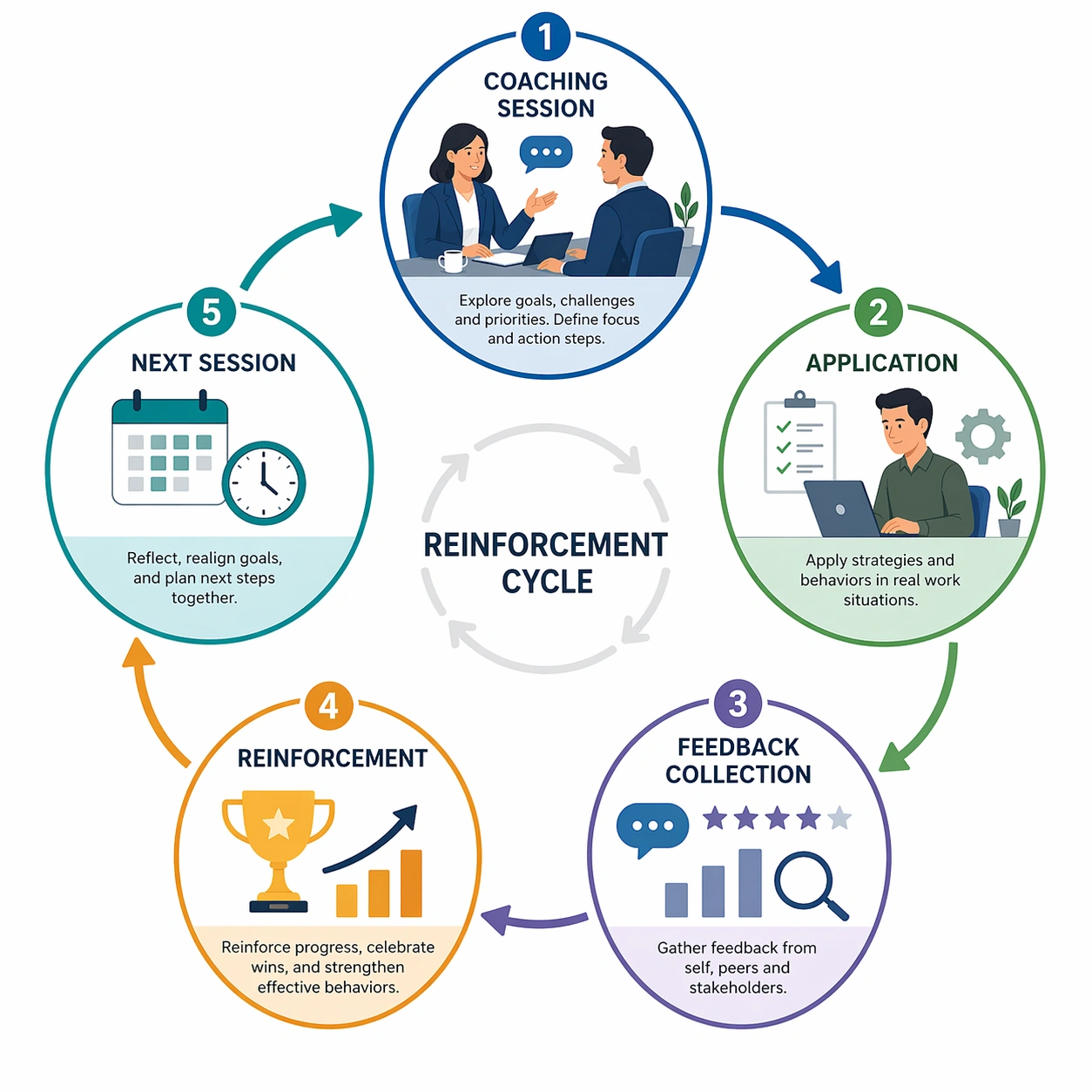
Behavior change requires reinforcement over time. Leadership coaching programs that build in ongoing peer support, accountability partners, structured follow-up, and between-session assignments are more likely to embed new leadership behaviors into daily routines.
Business Coaching for Managers: When Coaching Should Be Operational
Business coaching for managers should not stop at personal reflection. Managers operate inside systems, deadlines, policies, reporting relationships, and team expectations. Coaching needs to help managers make better decisions inside those real conditions.
For example, a manager who avoids accountability may not need a personality discussion first. The manager may need a clear process for documenting expectations, giving timely feedback, escalating repeated issues, and separating performance concerns from personal discomfort. That is where leadership coaching becomes operational instead of theoretical.
When coaching is designed well, managers do not simply leave sessions feeling understood. They leave with a specific action, a defined behavior to practice, and a follow-up mechanism that tests whether the behavior actually changed.
What to Expect from a Leadership Coaching Engagement
A well-run coaching engagement begins with a thorough assessment of current leadership capabilities and organizational context. That may include interviews, skills assessments, stakeholder input, job role review, and alignment with the strategic goals the leader’s role is meant to support.
From there, a customized coaching plan should focus on the measurable leadership behaviors most likely to produce the outcomes the organization needs. Regular sessions should include skill-building exercises, real-world application tasks, feedback review, and structured accountability.
The coach’s role is to act as a thinking partner and accountability mechanism. The role is not to become a motivational speaker, therapist, or consultant who simply tells the leader what to do. The purpose is to help the leader develop better judgment, clearer behavior, and stronger follow-through.
When to Hire Leadership Coaching Services
Organizations should consider leadership coaching services when managers are technically capable but inconsistent in delegation, communication, accountability, conflict management, or team leadership. Coaching is especially useful when turnover, poor morale, performance inconsistency, or manager avoidance points to leadership behavior gaps rather than simple training needs.
Coaching may also be appropriate when an organization is preparing supervisors for promotion, building a succession pipeline, supporting executives through organizational change, or helping new managers transition from individual contributor roles into leadership roles.
- Managers avoid difficult conversations or delay performance feedback.
- Executives need stronger alignment between leadership behavior and organizational strategy.
- Supervisors lack consistency in delegation, documentation, or accountability.
- High-potential employees need preparation for future leadership roles.
- Leadership issues are creating turnover, confusion, rework, or morale problems.
Anonymized Example: Coaching Managers Through Accountability Breakdown
An organization experiencing inconsistent supervision identified a recurring pattern: managers were technically competent but avoided accountability conversations until problems became more difficult to resolve. Employees described expectations as unclear, follow-up as inconsistent, and corrective feedback as delayed.
The coaching engagement isolated three leadership behaviors: defining expectations before work began, addressing missed expectations in real time, and documenting follow-up consistently. Coaching sessions were tied to active workplace situations rather than hypothetical examples.
Managers practiced specific conversation structures, reviewed recent leadership decisions, and used a feedback loop to evaluate whether employees could clearly explain expectations after coaching-supported interventions. The result was not a motivational reset. The result was a more consistent management rhythm that reduced ambiguity and improved accountability.
How to Choose Professional Coaching Services
Professional coaching services should be evaluated based on structure, relevance, experience, and measurability. A strong coaching provider should be able to explain what behaviors will be developed, how progress will be measured, how coaching connects to business outcomes, and what happens between sessions.
Organizations should be cautious of coaching models that rely heavily on inspiration, personality typing, or broad self-discovery without translating insights into observable leadership behavior. Reflection can be useful. Reflection without application is not enough.
Additional leadership and employee development guidance is available through SHRM organizational and employee development resources and American Management Association leadership resources.
- Ask about behavior targets: What specific leadership behaviors will the coaching engagement address?
- Ask about measurement: How will progress be evaluated during and after the engagement?
- Ask about reinforcement: What happens between sessions to support behavior change?
- Ask about organizational alignment: How will coaching connect to business goals, workforce issues, or leadership expectations?
- Ask about role fit: Does the coach understand the difference between executive coaching, manager coaching, and operational leadership support?
Common Mistakes in Leadership Coaching Programs
- One-time workshops with no follow-up. Managers leave inspired and return to unchanged systems. Within two weeks, the inspiration has faded and the behavior has not shifted.
- Failing to link coaching goals to organizational strategy. Development efforts that float free of business outcomes may produce interesting self-awareness but limited operational impact.
- No accountability for applying new skills. Without a structured mechanism that creates follow-through, coaching becomes optional.
- Overreliance on personality assessments. Knowing a leader’s personality type does not explain how to change behavior in a specific situation.
- No measurement of coaching outcomes. If the engagement ends without data on whether anything changed, the organization has no basis for deciding whether to continue, expand, or replace the program.
Leadership Coaching Implementation Checklist
- Define clear, observable leadership behaviors to develop.
- Connect coaching goals to organizational priorities and role expectations.
- Clarify whether the need is executive coaching, manager coaching, or operational leadership support.
- Ensure coaching includes real-world application, not just reflection exercises.
- Establish a structured feedback loop using assessments, check-ins, and stakeholder input.
- Build reinforcement mechanisms such as peer coaching, accountability partners, and between-session tasks.
- Measure progress with concrete indicators such as retention, engagement, leadership effectiveness ratings, performance follow-through, or team feedback.
- Integrate coaching outcomes into performance management, workforce development, or succession planning.
- Select coaches with demonstrated expertise in leadership behavior change, not just facilitation.
- Plan for a 6-to-12-month engagement when sustained behavior change is the goal.
For organizations building the broader leadership infrastructure around coaching, see leadership development consulting. For broader systems work, see organizational development consulting. For employee capability planning, see workforce development consulting in Texas. To discuss whether coaching is the right fit, schedule a leadership coaching consultation.
Frequently Asked Questions
Effective engagements usually run between 6 and 12 months. That window allows time for skill development, real-world application, feedback collection, and reinforcement cycles needed to make behavior change durable. Shorter engagements can create awareness, but they rarely produce sustained change by themselves.
Leadership coaching focuses specifically on developing the behaviors that influence team performance, organizational culture, and management accountability. General business coaching may cover broader topics including strategy, sales, entrepreneurship, or productivity. The distinction matters because managers and executives often need coaching tied to leadership behavior, not just business advice.
Yes. Coaching potential successors against a defined set of leadership competencies tied to the target role creates a more reliable readiness assessment than informal observation alone. The data generated during a structured coaching engagement can support succession decisions.
Accountability converts coaching conversations into behavior change. Without structured follow-through on between-session commitments, coaching becomes a series of interesting conversations with no operational impact. Peer accountability structures and formal progress reviews matter as much as the coaching relationship itself.
Personality assessments can be useful reflection tools at the start of an engagement, but they should not drive the coaching focus. Knowing a leader’s type does not explain how to change behavior in a specific leadership situation. Observable behaviors and organizational impact should guide the coaching plan.
Yes. Leadership coaching services should be customized around the manager’s role, authority level, team challenges, performance expectations, and the specific leadership behaviors the organization needs to improve. Generic coaching may be useful for reflection, but customized coaching is stronger when the goal is measurable workplace behavior change.
Related HR Questions, Answered
Direct answers from our HR FAQ library for Texas employers: