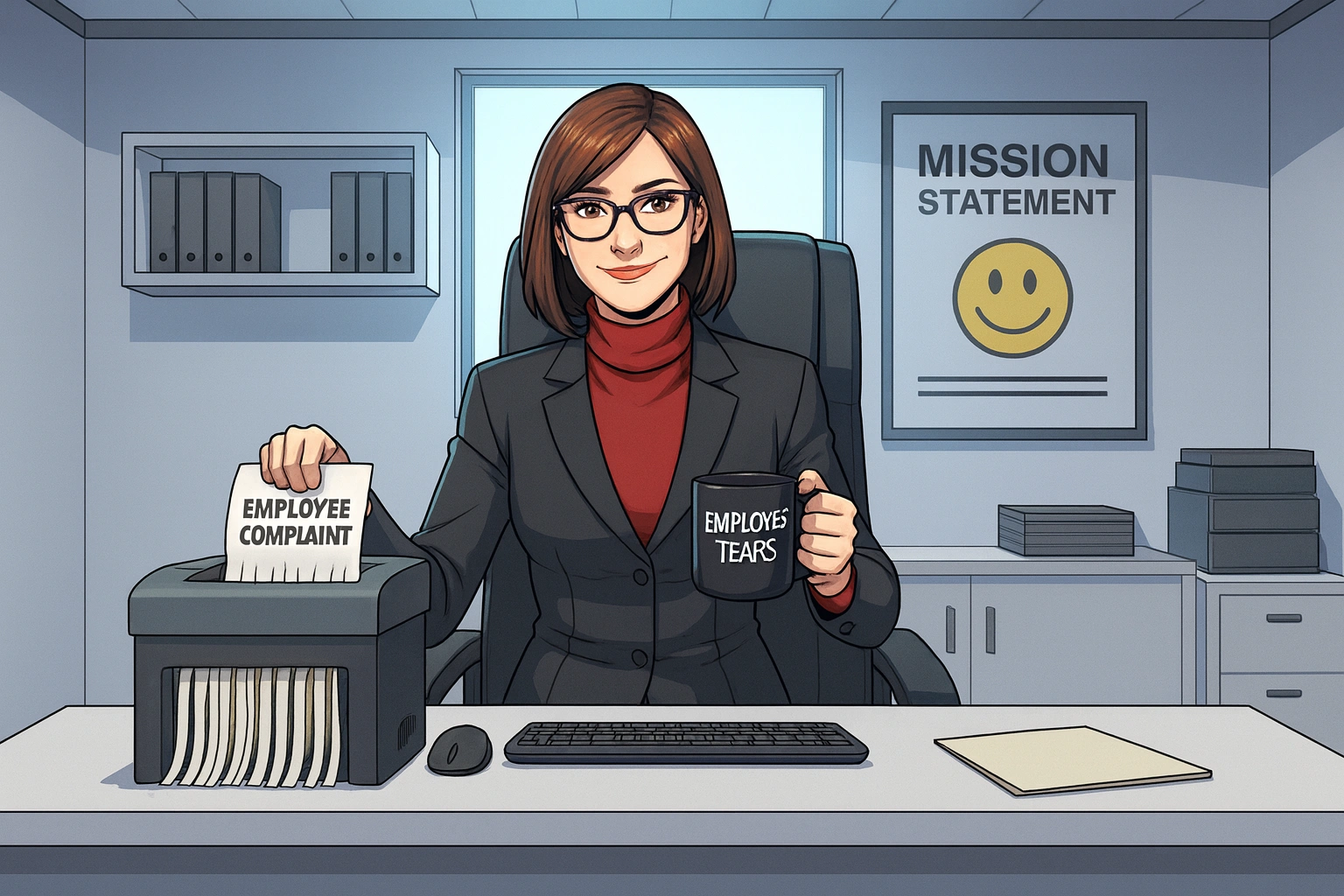
TL;DR: HR supports employees by creating clear policies, protecting fairness, managing benefits, guiding managers, supporting change, and building systems that make work more stable and effective.
HR helps employees by making work clearer, safer, and more consistent. That includes benefits, policies, documentation, conflict resolution, manager support, and change communication. When HR functions well, employees are better equipped to succeed and organizations are less likely to create avoidable problems.
What HR Actually Does
HR is often misunderstood because most of its best work happens before a problem becomes obvious. A strong HR function does not just process paperwork. It builds the structure that helps employees work effectively, helps managers lead more consistently, and helps the business operate with less confusion and less risk.
At a practical level, HR typically supports the workplace through policy development, benefits administration, compliance, employee relations, manager coaching, workforce planning, and organizational design. In other words, HR is responsible for far more than hiring and firing.
How HR Can Help Employees
When people ask how HR can help employees, the answer starts with clarity and protection. HR helps employees by creating policies that define expectations, administering benefits that support life outside work, documenting processes that prevent arbitrary treatment, and addressing workplace issues before they spiral into something larger.
HR supports employees through clear policies
Without clear policies, workplaces become inconsistent. One manager makes one call, another makes a different one, and employees are left guessing what is actually allowed. HR helps employees by building policies that define attendance expectations, leave practices, conduct standards, complaint processes, and workplace boundaries.
HR supports employees through benefits and payroll
Benefits and compensation are not background details. They affect daily stability. HR helps employees by managing payroll accuracy, coordinating benefit enrollment, communicating leave options, and making sure employees understand the resources available to them.
HR supports employees through fairness and documentation
Employees are better protected when expectations are documented, corrective action is consistent, and decisions are tied to facts rather than personal preference. Good HR reduces favoritism by reinforcing process, not mood.
HR supports employees through development
HR can also help employees grow. That may include onboarding, role clarity, supervisor support, training systems, and performance conversations that are designed to improve capability instead of simply checking a box. Strong workforce development systems and hiring and onboarding processes improve how quickly employees can contribute and how clearly they understand what success looks like.
If your organization struggles with morale, performance inconsistency, or unclear expectations, those are often signs that the HR system needs work, not just the individual employee. Related reading: How to Fix Low Employee Morale.
How HR Can Help Managers
Many managers are promoted because they perform well operationally, not because they were prepared to lead people. That is where HR becomes critical. HR helps managers by clarifying policy, coaching difficult conversations, creating documentation standards, guiding performance management, and reducing avoidable legal mistakes.
Manager support during employee issues
Managers often need support when dealing with attendance problems, conduct issues, accommodation requests, or performance concerns. HR helps managers respond consistently so that employee issues do not turn into compliance issues.
Coaching managers to lead better
Good HR does not just police managers after something goes wrong. Good HR helps managers improve before the damage is done. That includes coaching on feedback, expectations, accountability, and documentation. It also includes helping leaders understand where their own behavior may be increasing turnover, confusion, or risk. That kind of manager coaching and leadership support is one of the fastest ways to improve employee experience without creating more administrative clutter.
Reducing legal and operational exposure
When managers act without structure, they create organizational drag. HR helps managers by translating law, policy, and internal standards into usable guidance. That gives managers a better framework for making decisions without improvising their way into preventable problems.
If leadership inconsistency is affecting execution, internal trust, or retention, HR support should not be treated as optional. Related service: Leadership Development Consulting.
How HR Can Help Business
Some people frame HR support as if helping employees and helping business are competing priorities. In a healthy organization, they are connected. HR helps business by improving retention, reducing compliance risk, strengthening leadership, clarifying accountability, and building the internal structure needed for sustainable performance.
HR helps business reduce risk
Policies, documentation, investigations, training, and manager guidance all reduce exposure. That includes employment claims, inconsistent treatment, missed compliance obligations, and reputational damage caused by unresolved people problems. Businesses that need stronger policy control, cleaner documentation, or fewer avoidable employment mistakes usually need stronger HR compliance and risk reduction support.
HR helps business improve retention
Turnover is rarely just a hiring problem. It is often a systems problem. HR helps business by identifying the structural reasons employees leave, whether that is poor supervision, unclear expectations, weak onboarding, inconsistent accountability, or a lack of growth pathways. Related service: Workforce Stabilization.
HR helps business improve execution
HR is not just about protection. It also supports performance. When roles are clear, managers are supported, processes are consistent, and workplace friction is reduced, the business becomes easier to run.
For organizations dealing with policy gaps, process inconsistency, or employment risk, related service: HR Compliance Consulting and HR Audits & Diagnostics.
How HR Can Help With Change
Organizational change creates risk because people do not just react to the new structure. They react to uncertainty, mixed messages, and the loss of clarity that often follows transition. HR helps with change by improving communication, clarifying roles, guiding leaders, addressing employee concerns, and reinforcing consistency during periods of disruption.
Change communication
Employees do not need corporate theater. They need clear communication about what is changing, why it is changing, how it affects their role, and what support exists during the transition. HR helps leaders communicate change in a way that reduces confusion and rumor-driven instability.
Role clarity during transition
One of the fastest ways to damage morale during change is to leave responsibilities undefined. HR helps with change by supporting job redesign, reporting clarity, escalation pathways, and practical expectations.
Training and transition support
New systems, new structures, and new expectations require reinforcement. HR helps with change by designing training, onboarding transition steps, and manager guidance so that change is actually operationalized rather than merely announced. When organizations need help with how HR supports organizational change at a systems level, that usually falls under organizational development consulting.
Organizations navigating restructuring, expansion, role redesign, or process change often need more than messaging. They need operational design. Related service: Organizational Development Consulting.
How HR Can Help Build the Organization of the Future
HR can help build the organization of the future by aligning workforce strategy, leadership capability, role design, training systems, and accountability structures with where the business is going next, not just where it is today.
If the goal is to build the organization of the future, HR has to move beyond administration. Future-ready organizations need better leadership pipelines, stronger workforce planning, clearer capability development, and systems that can adapt without breaking under pressure.
Workforce strategy
HR helps build the organization of the future by connecting staffing, structure, capability, and business direction. That means looking beyond current vacancies and asking whether the organization is designed to perform well a year or two from now.
Leadership development
Organizations do not become stronger because they declare better values. They become stronger because their managers are better prepared. HR helps build the future organization by strengthening supervisor effectiveness, accountability, and internal decision quality.
Capability-building systems
Training only matters if it improves performance. HR helps build the organization of the future by creating onboarding, development, and performance systems that are tied to real competencies rather than generic content.
Culture supported by structure
Culture is not built through slogans alone. HR helps build the organization of the future by creating structures that reinforce fairness, clarity, communication, and measurable accountability. Without that, culture becomes branding language with no operational backbone.
Why Employees Often Misunderstand HR
HR gets blamed for many workplace problems because employees often encounter HR only after something has already gone wrong. That can make the function feel reactive or adversarial. In reality, weak trust in HR is often a sign that the organization has underinvested in clarity, leadership quality, communication, or policy design.
Bad HR exists. So do weak leaders and weak systems. But the existence of bad HR does not change the purpose of the function. Effective HR is supposed to create the structure that protects employees from inconsistency, helps managers act more responsibly, and helps the business operate with less chaos.
Traditional HR vs Strategic HR
Historically, HR was seen as primarily administrative. Modern organizations need more than administration. They need HR that supports employees, managers, and the business through stronger systems and more intentional workforce design.
| Aspect | Traditional HR | Strategic HR |
|---|---|---|
| Primary Focus | Administration, compliance, record-keeping | Talent strategy, leadership support, organizational performance |
| Role in Business | Support function | Operational and strategic partner |
| Employee Impact | Reactive problem handling | Clearer expectations, better support, stronger workplace systems |
| Manager Support | Policy reminders after issues occur | Coaching, guidance, accountability, and prevention |
| Approach to Change | Administrative implementation | Communication, role clarity, training, and workforce stabilization |
| Long-Term Value | Maintains minimum standards | Builds organizational capability and resilience |
Why This Perspective Matters
You can dislike weak HR without dismissing what strong HR is supposed to do. The better question is not whether HR is good or bad in the abstract. The better question is whether the organization has built an HR function that actually helps employees, helps managers, helps business, and helps with change.
That is the standard that matters. If HR is only administrative, it will always feel limited. If HR is strategic, practical, and operationally grounded, it becomes one of the most important support functions in the organization.
If your organization needs stronger workforce structure, better policy design, more consistent leadership, or a more functional HR operating model, explore HR consulting services, review our organizational development work, or contact Faulkner HR Solutions.
Frequently Asked Questions About How HR Supports Employees
How can HR help employees?
HR helps employees by creating clear expectations, managing benefits, addressing workplace concerns, supporting development, and helping ensure fair treatment.
How can HR help managers?
HR helps managers by clarifying policy, supporting performance management, coaching on employee issues, and reducing legal and operational risk.
How can HR help business?
HR helps business by improving retention, reducing compliance risk, strengthening leadership, and building systems that support growth.
How can HR help with change?
HR helps with change by managing communication, role clarity, training, transition planning, and employee concerns during organizational shifts.
How can HR help build the organization of the future?
HR helps build the organization of the future by aligning workforce strategy, leadership development, culture, structure, and capability-building with business direction.
Sources and Further Reading
For organizations looking to improve how HR supports employees in practice, additional useful resources include your HR compliance consulting page, leadership development consulting, organizational development consulting, and related insights such as How to Fix Low Employee Morale and Outsourcing HR Functions.