

Why This Guide Matters: Stop Reacting, Start Leading
Most Texas small business owners see "HR" as a four-letter word for paperwork and problems. It’s the binder on the shelf, the payroll you run late at night, and the policies you copied from a template online. That patchwork approach works right up until the moment it spectacularly fails. One mishandled harassment claim in Austin or one payroll mistake in Dallas, and the Texas Workforce Commission (TWC) isn't just a name—it's a certified letter in your mailbox.
This guide isn't about paperwork. It’s about risk management. It’s about building a business where costly mistakes don’t happen because your team receives proper compliance education, your managers are confident, and your systems are clear. Good HR isn’t a cost center; it’s the engine that protects your profits and helps you keep the great people you worked so hard to hire.
Why Listen to Me?
I’m Dr. Thomas Faulkner, founder of Faulkner HR Solutions. Through my consulting work with both private businesses and public sector entities across Texas, I’ve built HR systems that are clear, compliant, and designed to protect employers when it matters most. I hold a Doctorate in Business Administration, the SPHR certification, and a Lean Six Sigma Black Belt, but what matters more is that the strategies I deliver are tested in real workplaces, not just textbooks.
From modernizing policies to training managers on compliance, my work equips small businesses with practical tools that reduce risk, improve retention, and create a workplace where employees can thrive—and where owners can focus on running their business, not fighting HR fires.
Part 1: Top 2 Texas HR Compliance Risks for Small Businesses
Most compliance disasters in Texas don't come from bad intent. They come from untrained managers making their best guess. Here are the two issues that sink small businesses most often.
Texas Payroll Compliance: Avoiding Wage & Hour Mistakes

The Problem: Wage and hour violations are the #1 reason the TWC hears from angry employees. The issue isn’t owners trying to short their staff; it’s supervisors who have never been trained on the Fair Labor Standards Act (FLSA). They assume salaried employees never get overtime, or that paying cash means no reporting. Both assumptions are wrong and create huge liability.
Pro Tip: Timekeeping accuracy is the bedrock of Texas payroll compliance. A single miscalculation, repeated across multiple employees and pay periods, can escalate into a five-figure penalty.
Case Study: A San Antonio restaurant owner was investigated for unpaid overtime. He assumed his managers "knew the rules." They didn’t. After the fine, he trained every supervisor on accurate timekeeping and audited payroll quarterly. The compliance education stopped the bleeding, but the initial penalty and back wages cost him over $25,000.
Action Plan:
- Train Supervisors: Schedule a one-hour workshop on Texas payday law, overtime, and timecard approval for all managers.
- Audit Payroll: Conduct a quarterly audit on a small sample of employee records to catch errors early.
Texas Employee Handbook Requirements & Harassment Prevention
The Problem: An employee policy manual nobody reads is worthless. While Texas doesn’t legally require a handbook, operating without one is like driving without insurance. When conflict happens, because its not a question of if, a clear, consistently enforced policy is your best defense. The biggest risk is harassment and discrimination. Assuming "we don't have that problem here" is a gamble, not a strategy. For guidance, you can explore our employee handbook services.
Case Study: A Fort Worth contractor avoided a costly lawsuit because its supervisors had been trained to recognize, respond to, and document a harassment complaint immediately. The handbook laid out the policy, but the training gave managers the confidence to act on it. The employee felt heard, the issue was resolved internally, and the business was protected.
Action Plan:
- Update Handbook Annually: Review and update your policies on harassment, safety, and timekeeping at least once a year.
- Train the "Big Three": Mandate annual training for all employees on your harassment, safety, and attendance policies.
Ready to get organized? Don't wait for a problem to arise. Download the complete Texas HR Checklist to start tracking your compliance tasks today.
Part 2: Essential Workforce Training for Texas Small Businesses
Turnover is expensive, and it’s often caused by sloppy hiring and nonexistent onboarding. You can’t expect new hires to succeed if you just throw them onto the floor and hope for the best.

Hiring and Onboarding: Your First Step in Small Business HR Compliance in Texas
The Problem: Bad hires are rarely the candidate’s fault. They’re the result of untrained managers asking illegal interview questions, making inconsistent decisions, or failing to complete required paperwork like the I-9 and W-4. Onboarding programs are even worse—new hires are handed a handbook, pointed to a desk, and left to figure things out. That isn't a system; it's a recipe for frustration and quick exits.
Case Study in Action: A retail shop in Houston cut first-year turnover by 30% with one change. They stopped putting new hires on the sales floor on day one with the sink or swim mentality and instead, created a week long, structured onboarding program and mentorship program that covered company culture, job duties, and compliance basics. The policies didn’t change. The training did.
Action Plan:
- Build a 30-Day Plan: Map out a new hire's first month, covering job tasks, key policies, and culture.
- Train Interviewers: Provide managers with a checklist of legal and effective interview questions.
- Audit Forms: Regularly confirm your I-9, W-4, and Texas new hire reporting processes are correct.
Texas Workforce Training Requirements for Safety (OSHA)
The Problem: Federal OSHA rules apply to almost every business in Texas. Treating safety as a one-time video and a forgotten signature is negligent. Real training requires repetition and reinforcement, especially in industries like construction, manufacturing, and healthcare.
Case Study: A Lubbock manufacturer cut workplace accidents by 20% after they replaced their annual, boring safety lecture with monthly 20-minute "toolbox talks." The training was short, frequent, and directly related to the team's tasks. Because it was repeated, employees actually remembered it.
Action Plan:
- Identify OSHA Rules: Determine which federal standards apply to your specific industry and workplace.
- Make Training Bite-Sized: Ditch long annual meetings in favor of short, recurring safety refreshers.
- Find Free Money: Research the TWC's "Skills for Small Business" program to see if you qualify for training grants.
Part 3: Your Texas HR Compliance Checklist & Toolkit
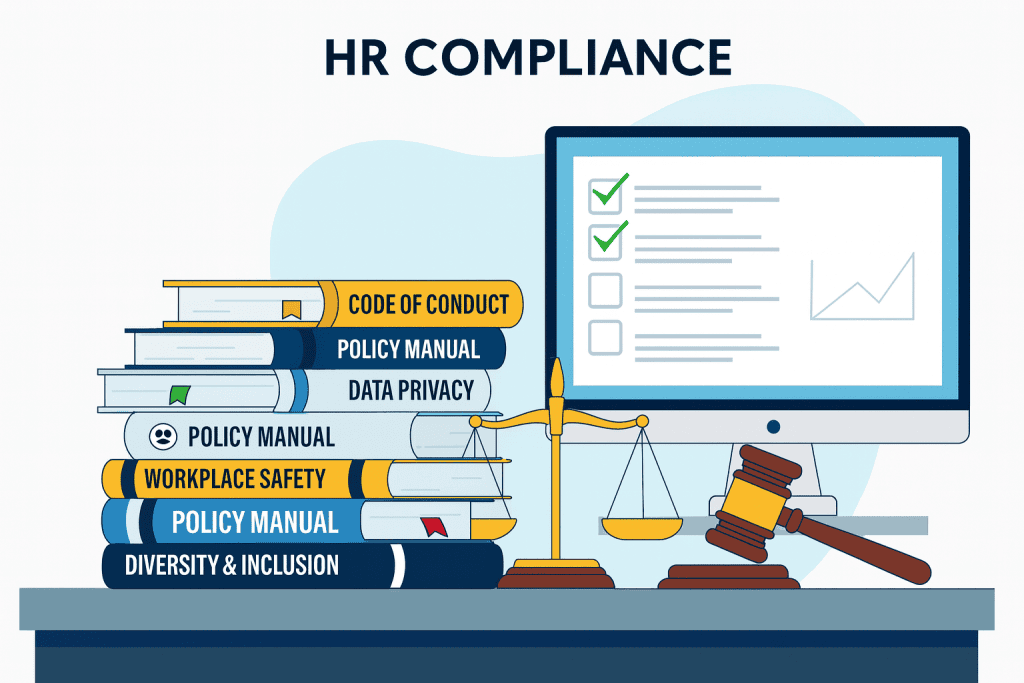
This isn't as complicated as it seems. A simple roadmap removes the guesswork and makes compliance manageable.
Your Annual Texas HR Compliance Checklist
| Quarter | Month | Focus Area | Key Actions | Micro-Training (Mid-Month) |
|---|---|---|---|---|
| Q1 | January | Harassment & Policy Training | Deliver annual anti-harassment training to all staff. Review employee handbook and collect new acknowledgment forms. | 15-min refresher: “What counts as harassment?” |
| February | Policy Enforcement | Managers review attendance, timekeeping, and safety reporting policies with teams. | Role-play session: “How to respond to a complaint” | |
| March | Policy Audit | Leadership reviews handbook for gaps (harassment, leave, safety, wage reporting). Update if needed. | Quick quiz: “Do you know your top 3 workplace policies?” | |
| Q2 | April | Payroll & Wage Compliance | Conduct internal audit of 3 random payroll records. Correct errors. | 15-min refresher: “Overtime myths vs. reality in Texas” |
| May | Supervisor Payroll Training | Train managers on timecard approval and Texas payday law. | Practice drill: “Spot the payroll error” | |
| June | Recordkeeping Review | Ensure I-9, W-4, and Texas New Hire Reporting forms are up to date and filed. | File-check activity: “Can you find the missing form?” | |
| Q3 | July | Safety Refresh | Conduct OSHA-required training for your industry (construction, healthcare, etc.). | Toolbox talk: “Today’s top 3 safety risks” |
| August | Emergency Preparedness | Review fire drills, severe weather plans, and emergency contacts. | Walkthrough: “What do we do if…?” | |
| September | Accident Response Training | Supervisors practice documenting incidents and reporting to OSHA/TWC. | 10-min drill: “How to fill out an incident log” | |
| Q4 | October | Hiring & Onboarding Review | Update onboarding plan and job descriptions for accuracy. | 15-min refresher: “Legal vs. illegal interview questions” |
| November | Manager Training | Train supervisors on consistent interview practices and bias awareness. | Role-play: “Conducting a compliant interview” | |
| December | Year-End Compliance Audit | Review all policies, training records, and payroll audits. Set HR goals for 2026. | Mini-session: “What compliance task did we miss this year?” |
Essential Tools & Resources
- Texas Workforce Commission: Bookmark their employer resources page. It has forms, guides, and contact information.
- OSHA: Provides free safety training materials and industry-specific guidelines.
- SHRM: The Society for Human Resource Management offers guides and articles on compliance best practices.
- Low-Cost Software: A digital time-tracking app and a simple Learning Management System (LMS) can automate tracking and save dozens of hours a year.
Frequently Asked Questions
No, Texas law doesn’t force you to have a formal HR department. But you are still required to follow complex rules around payroll, hiring, and safety. That means you need a designated person — even if it’s you — who is trained to handle HR compliance tasks. Think of it less as a department and more as a core business function that keeps you out of trouble.
Every Texas small business should have an annual HR compliance checklist that covers payroll audits, harassment training, safety refreshers, and onboarding updates. We provide a free Texas HR Compliance Checklist you can download and use to track tasks quarter by quarter.
Texas doesn’t mandate one universal training program, but federal laws apply. OSHA requires safety training in most industries, and harassment prevention training is strongly recommended. Many employers also provide onboarding compliance training for new hires. These aren’t just boxes to check — they’re your best defense if the Texas Workforce Commission (TWC) investigates.
Texas law doesn’t make harassment training mandatory statewide, but it’s considered a best practice. If you ever face a lawsuit or TWC complaint, investigators will ask whether you trained your staff. Smart employers run harassment training annually, keep attendance records, and review policies with all employees.
Texas employers must follow federal wage laws, including overtime under the FLSA, and also comply with Texas payday law. You’re required to pay employees on a regular schedule, issue final paychecks promptly, and maintain accurate timekeeping. Supervisors need payroll training to prevent mistakes that often trigger TWC complaints.
Yes. Every Texas employer must report all new hires and rehires within 20 days to the Texas New Hire Reporting Program, which helps track child support and unemployment claims. Failing to do so can result in penalties. This is one of the easiest compliance tasks to automate with the right HR system.
If you fail a TWC audit, you could face fines, back pay orders, or higher unemployment tax rates. In most cases, issues stem from missing payroll records or misclassified employees. Training managers on recordkeeping and conducting self-audits each quarter can prevent problems long before the TWC shows up.
The Texas Workforce Commission offers grants through its Skills for Small Business program, which can fund employee training at community colleges. OSHA also provides free safety training resources, and SHRM publishes compliance guides. Faulkner HR Solutions also provides free resources from a local Texas brand you can trust. Start with free resources, then layer in paid programs as your business grows.
The TWC is both an enforcer and a resource. On one hand, they investigate wage claims, unemployment insurance, and payroll compliance. On the other, they provide training grants, compliance resources, and guidance for small businesses. Think of them as both the referee and the coach — they can penalize you if you’re noncompliant, but they can also help you build stronger systems.
Conclusion: HR Isn’t a Headache—It’s a Strategy
Viewing HR and training as just another expense is a critical mistake. Every dollar you spend on a TWC fine, every great employee you lose to a confusing onboarding process, and every hour you waste fixing a preventable payroll error is the true cost of not having a system.
Clear systems and trained people are what separate businesses that struggle from businesses that scale. Start today.
Your Next Steps: Choose Your Path to Compliance
- Step 1 (Free): Download the complete Texas HR Checklist to get an immediate handle on your biggest risks.
- Step 2 (Low-Cost): Schedule a single training session with your team this quarter. Pick one high-risk topic like harassment or payroll to make an immediate impact.
- Step 3 (Full Support): Ready to build a complete system? Explore our HR training services designed specifically for Texas small businesses.
For specific legal questions, consult an employment attorney. This guide is for educational purposes, not as a substitute for legal advice.